Viewing entries in
UN

IFOR expresses concern at the UN for the freedom of thought, conscience and religion and expression in Ukraine

Comment

IFOR expresses concern at the UN for the freedom of thought, conscience and religion and expression in Ukraine

Today, December 15th, at the UN in Geneva Deputy High Commissioner for Human Rights, Nada Al-Nashif presented the findings of the latest OHCHR periodic report on the situation of human rights in Ukraine.

During the interactive dialogue several countries took the floor, followed by representatives of the civil society.

The main representative of IFOR at the UN in Geneva delivered a statement concerning the right to conscientious objection to military service in the country, forced enlisting and other related issues.


Human Rights Council 

Geneva, 15th December 2021 

Interactive dialogue on the oral presentation by the High Commissioner for Human Rights  on the findings of the latest OHCHR periodic report on the situation of human rights in Ukraine (HRC res. 41/25)  

Oral statement delivered by the International Fellowship of Reconciliation. 

Madam President,  

International Fellowship of Reconciliation (IFOR) thanks the High Commissioner and her office for the oral presentation  on Ukraine. 

IFOR is concerned about violations of the right to conscientious objection reported on the ground. 

The local media recently reported the case of the young Vladyslav Korol who expressed his conscientious objection for  religious reasons and was eventually transferred to military service as a military recruit.1 

Another case concerns two players of the Ukrainian national handball team Ruslan Diyakon and Dmitry Kovalenko  detained by representatives of the police and District Territorial Center for Recruitment and Social Support.2 

The Human Rights Committee, in its concluding observation on the 8th periodic report of Ukraine, stated that "The  State party should ensure that abductions and arbitrary detention of conscripts are promptly, thoroughly, and  independently investigated, [that perpetrators are prosecuted and punished and that victims are provided with  effective remedies, including adequate compensation.]"3 

We would also like to continue to draw the attention4to the case of the Ukrainian journalist and pacifist Ruslan Kotsaba  who is under trial5 because of a video posted in 2015 to express opposition to the military mobilization for armed  conflict in eastern Ukraine6. He has already spent over 500 days under arrest and has been victim of assaults7 by haters  for whom there is still impunity.  

“Freedom of thought, conscience and religion is a non-derogable right”, alike freedom of expression, “and it continues  to apply regardless of a situation of armed conflict.” 

Thank you. 


The situation of the right to conscientious objection in Ukraine is critical and there are other relevant issues concerning military service and young conscripts.

You can read here the report prepared by IFOR for the review of Ukraine at the 133rd session of the UN Human Rights Committee, which took place in October 2021.

Comment

Comment

IFOR "Introduction to the UN" 2nd edition

IFOR "Introduction to the UN" 2nd edition

Sept 21st Gandhi statue

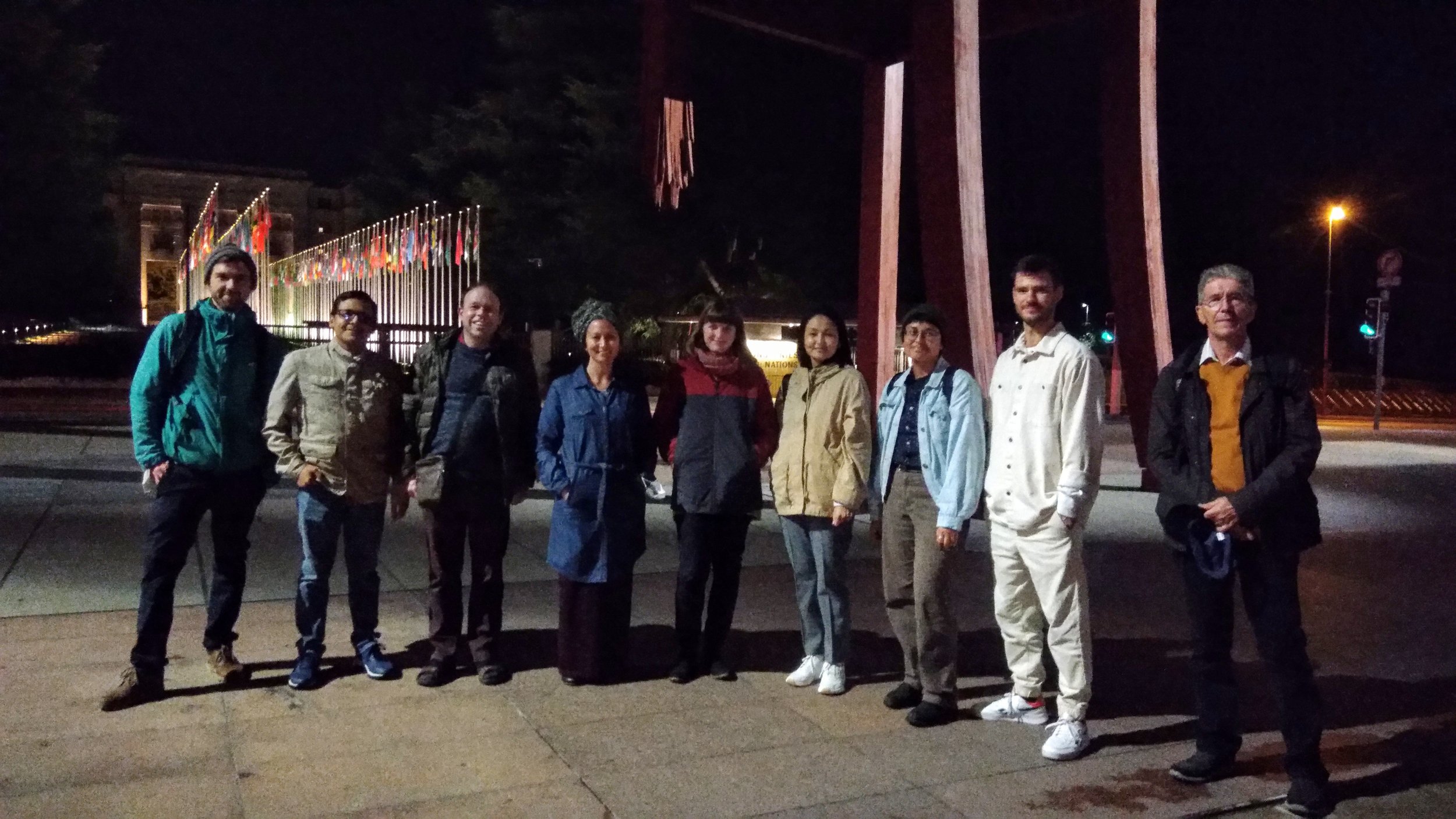
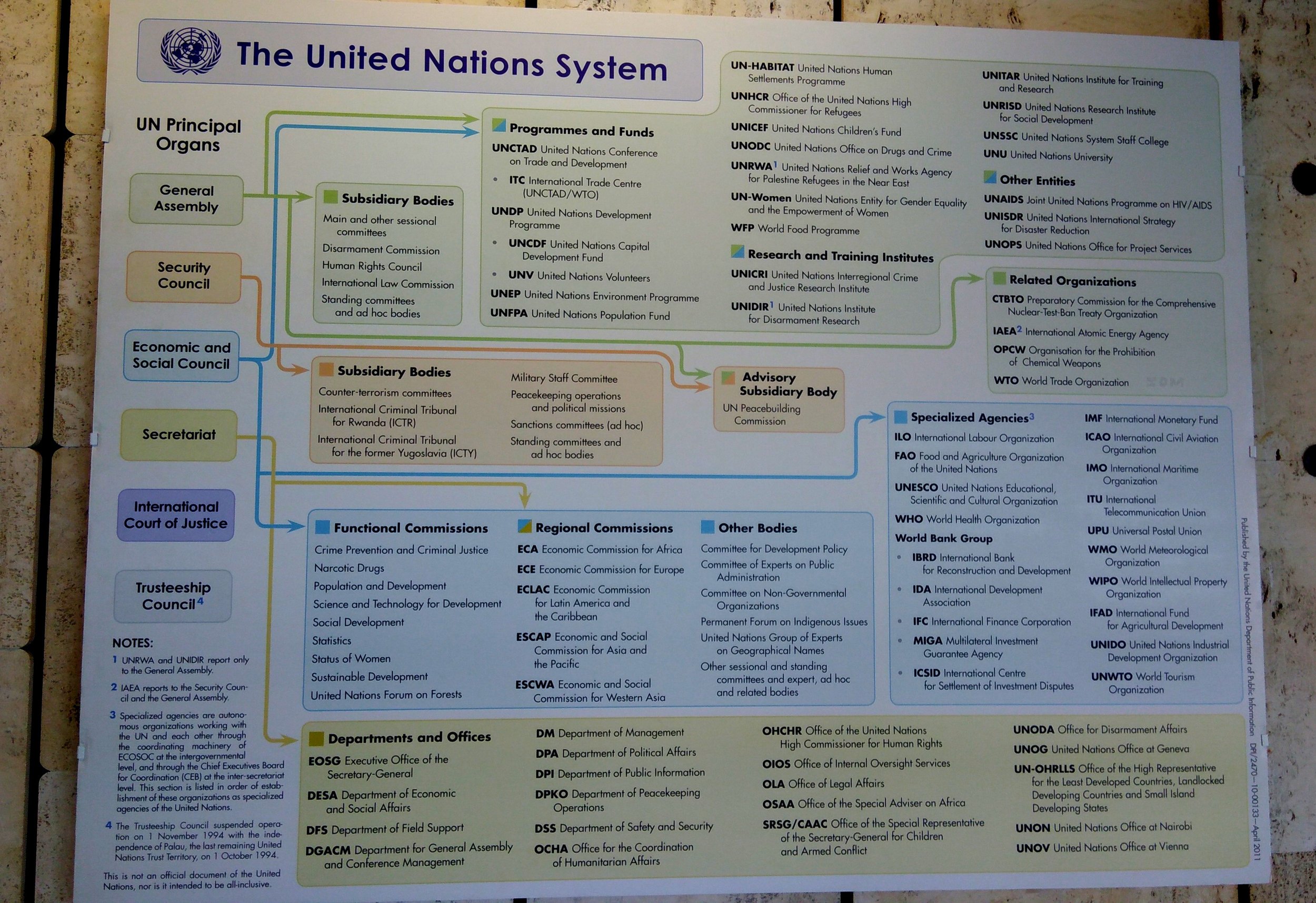
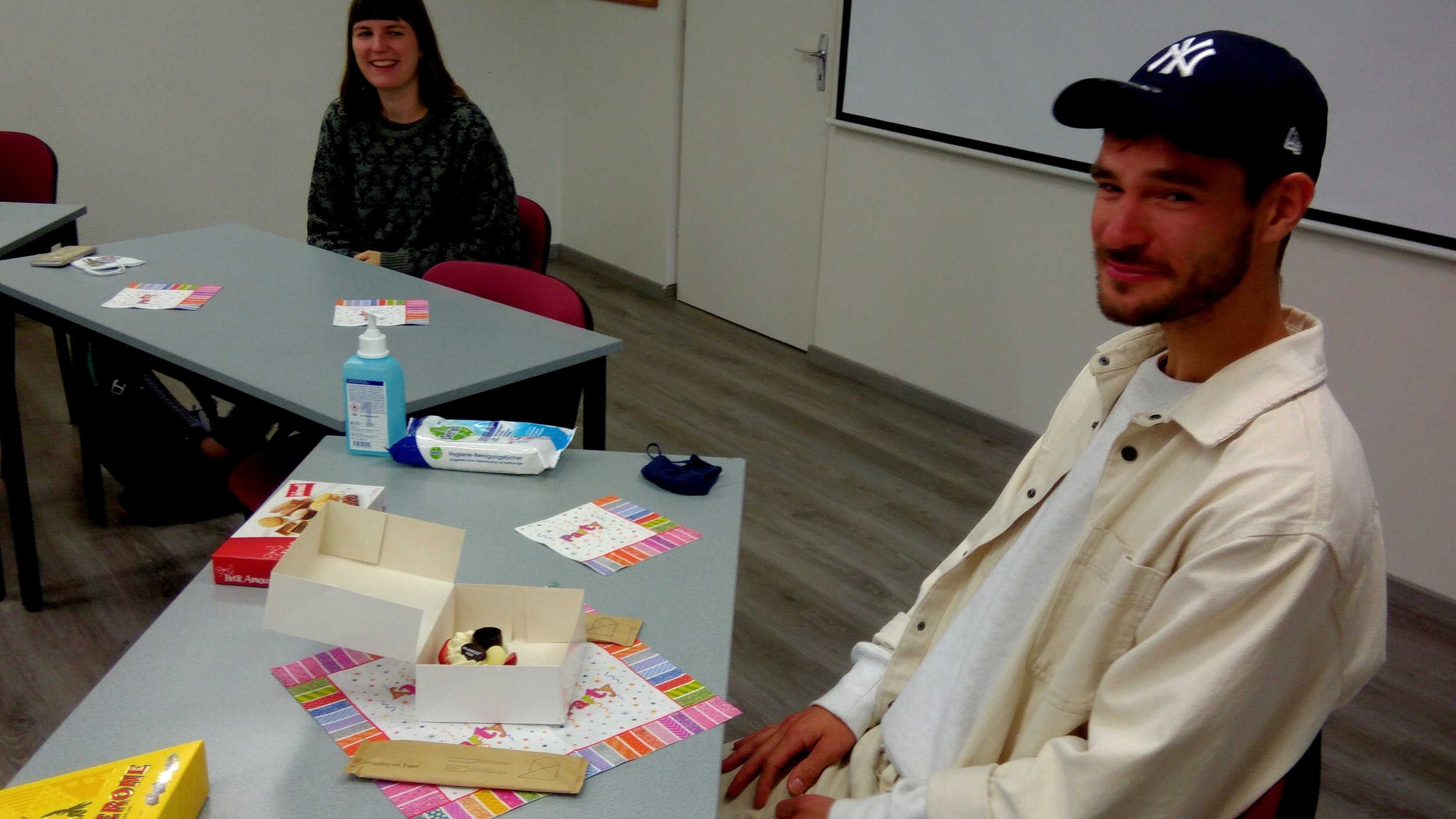
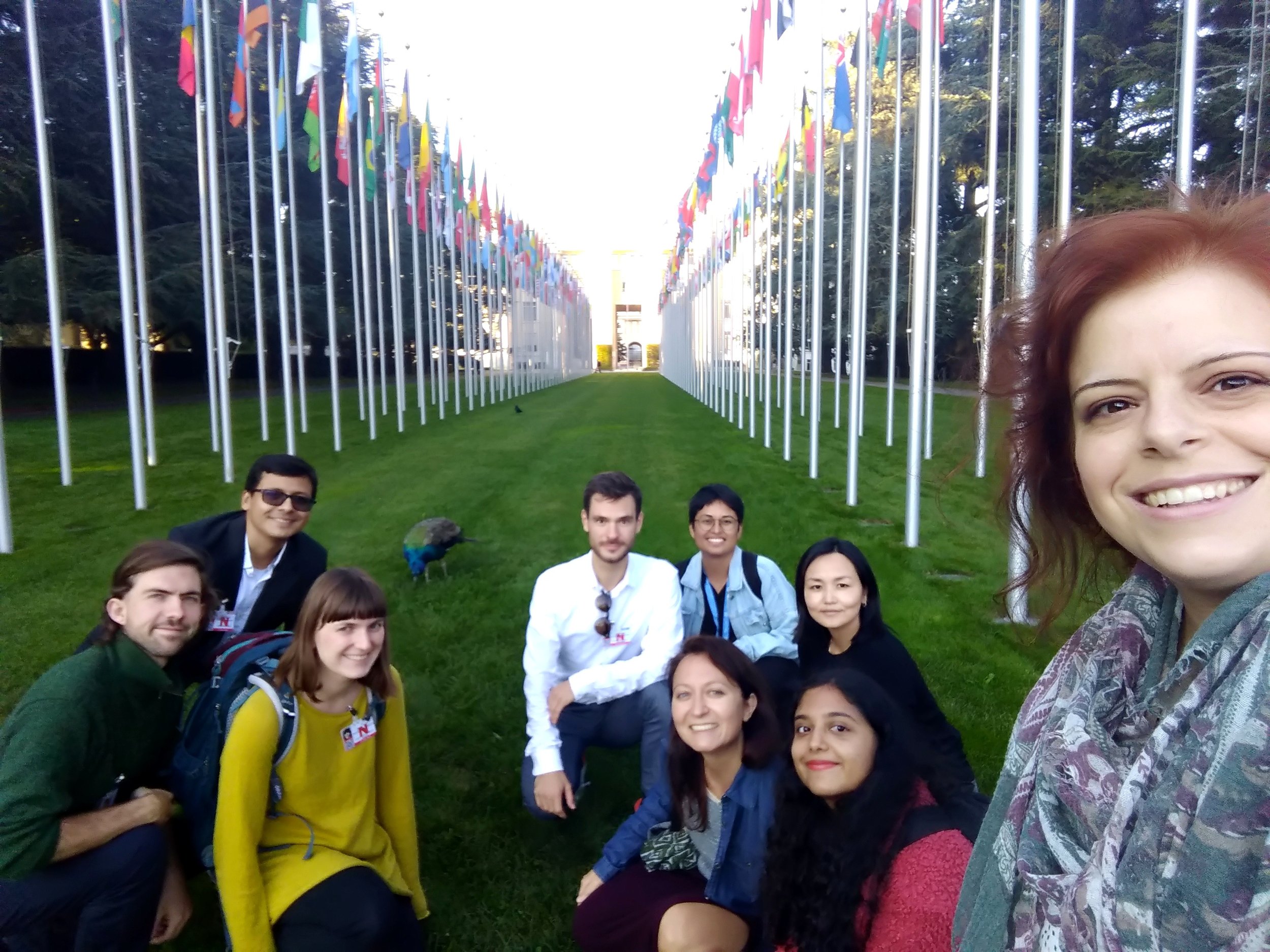
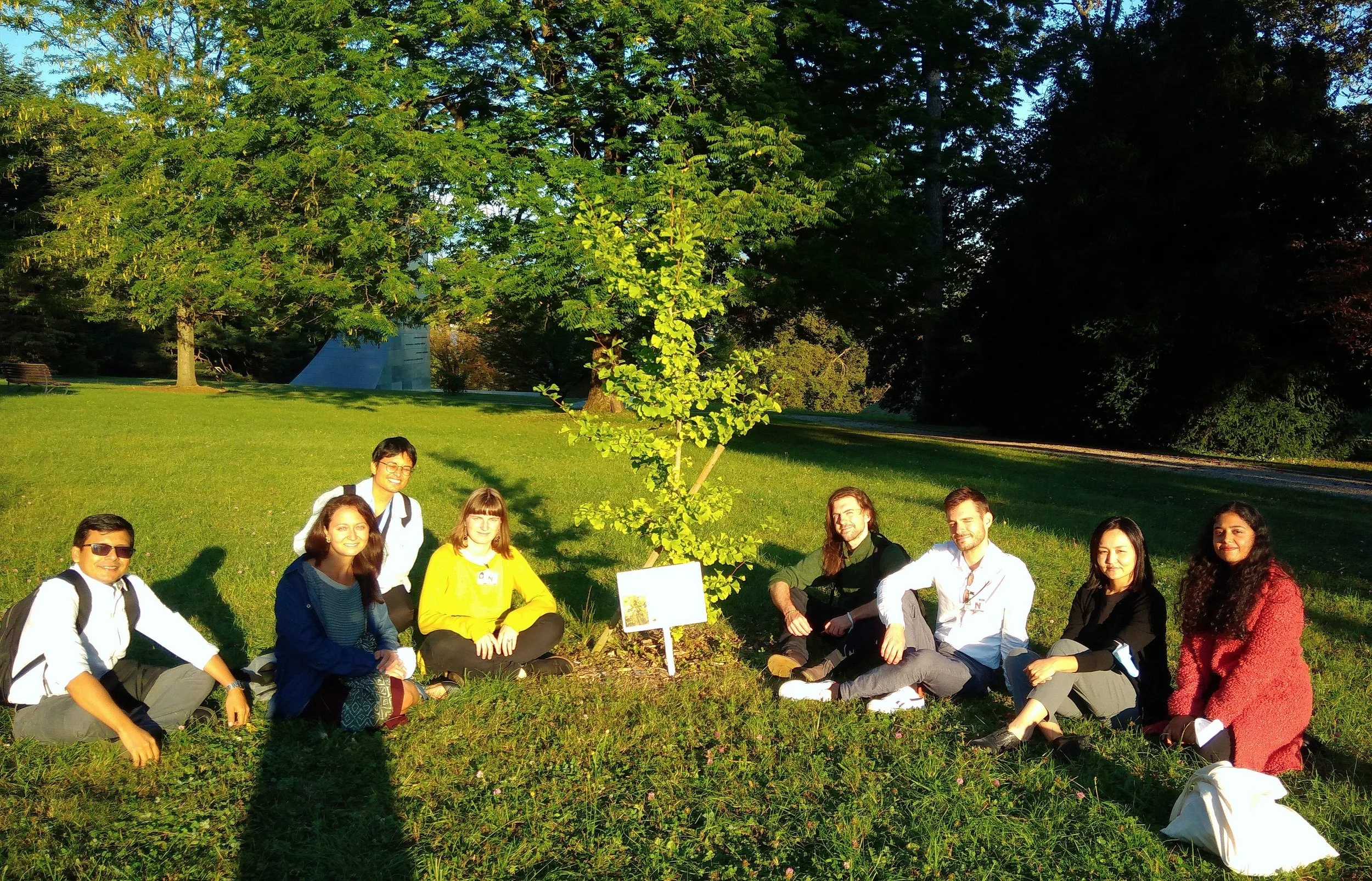
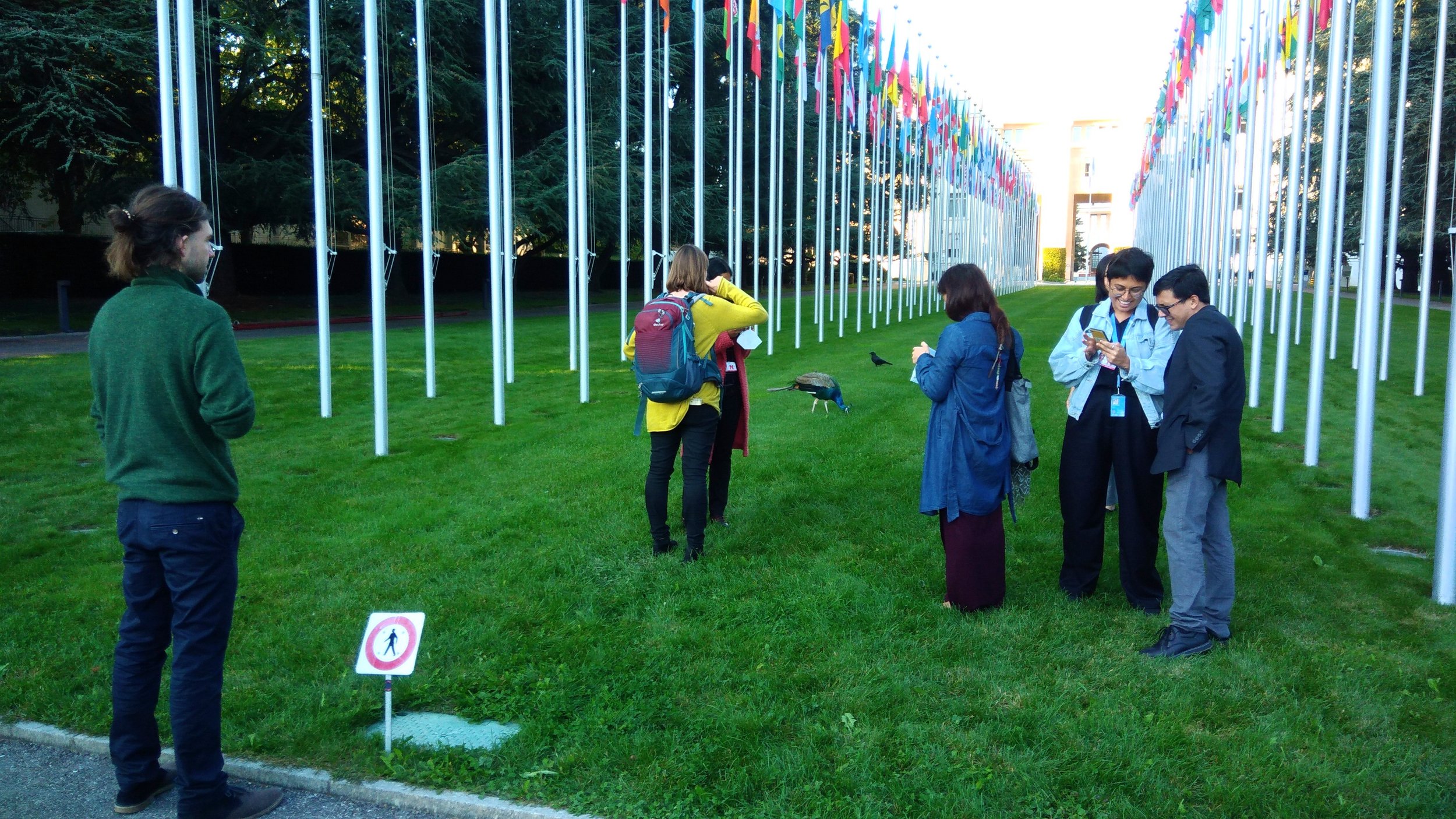
The new edition of the "Introduction to the UN" program took place on September 20th-24th, 2021; the special program aimed to provide an opportunity to come and see the work of IFOR at the United Nations in Geneva and experience first-hand engagement within the UN system.

This year, empowering training was part of the project "Empowering civil society representation at the United Nations", funded with the support of Otto per Mille of the Waldensian Church of Italy.

The project was carried out with the full involvement of 9 participants from Colombia, Holland, Spain, Germany, Austria, Czech Republic, Italy, five women and four men.

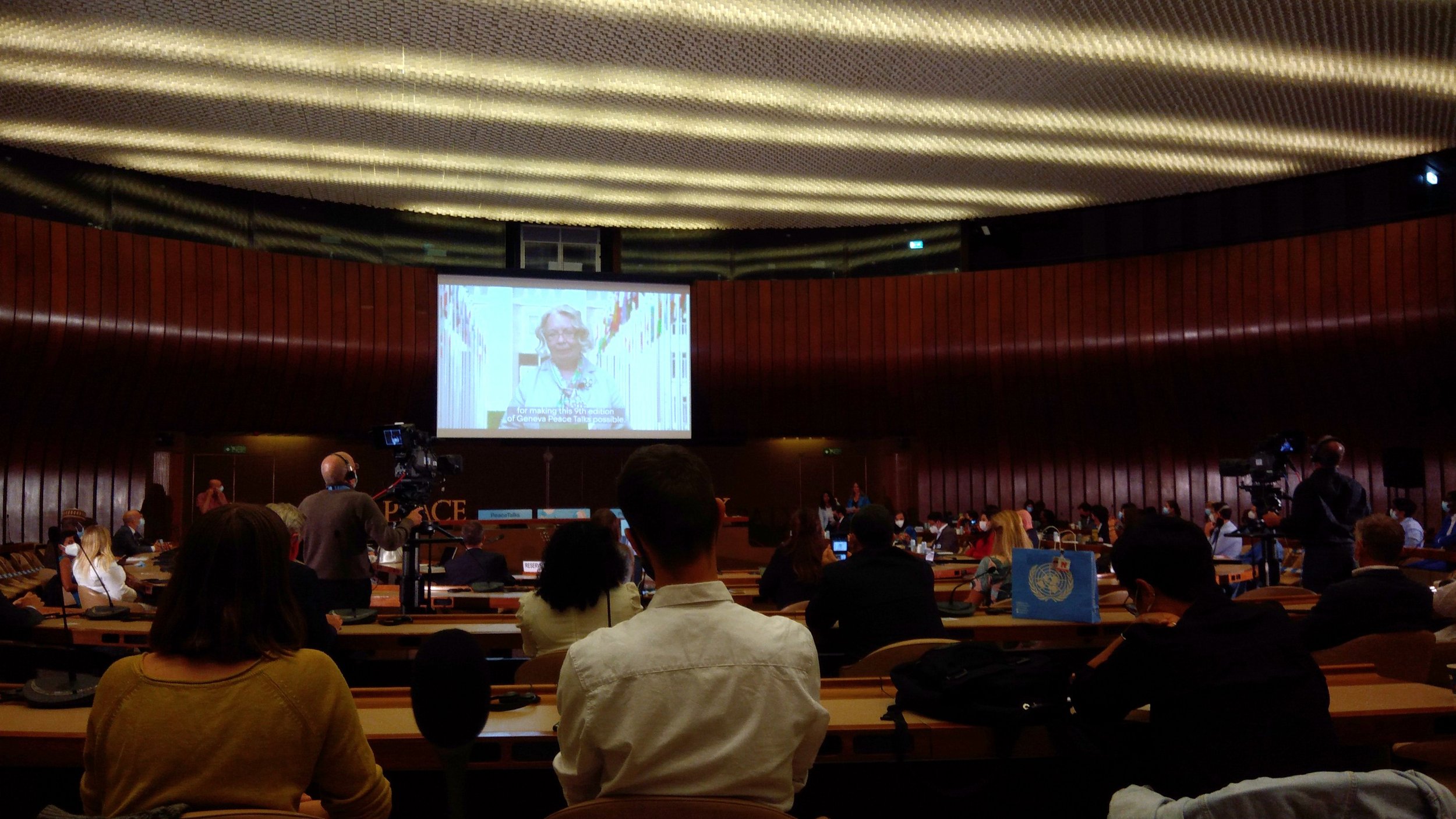
During the week of the project, the coordinator Z. Zafarana, on behalf of IFOR, and IFOR's additional representative at the UN, H. Gerber. The variety of backgrounds enriched the exchanges between the participants and the insights gained; in fact, apart from the place of origin, we had people from the Caribbean, Kyrgyzstan and India among the participants. The week's stay in Geneva presented a varied learning and experiencing program that alternated between moments of in-depth study of the UN system and moments of encounter and exchange with human rights defenders. Other moments were devoted to participation in official UN meetings, such as the ongoing session of the Human Rights Council and the Geneva Peace Talks on International Peace Day.


READ ABOUT OUR PARTICIPANTS' FEEDBACK:

"It was an intensive and interesting time with the great opportunity to get to know other committed young people and human rights defenders." - Sophia

"Introduction to the UN" was one of the eye-opening events I have ever participated in. The agenda was perfectly scheduled, the participants fit well together, all other moments organized so well that we could get most of it despite the COVID restrictions. I wish IFOR would continue to maintain such an enthusiasm to support those who are willing to speak out about their issues, thus contributing to the peace movement." - Aku

"Introduction to the UN" is an intense and brilliant way to get to know and experience how the UN functions. To me was a chance to visit Geneva and its diplomatic atmosphere as well as lifestyle. In a multicultural environment, I had the chance to know more about local cases of human rights defenders such as the ones in South America witnessed by other participants and activists. I really enjoyed it and it was really inspiring!" - Silvia

"I enjoyed the program in general a lot as it helped me to get a deeper understanding of the UN in general and IFORs international work in particular. It was super interesting to slowly realize how complex international diplomacy can be and how strategic the work of NGOs like IFOR has to be to achieve any impact on a specific topic." - Marco

"This was an enlightening experience with a really engaged group, that was put together in the midst of covid restrictions, that nevertheless conveyed the reality of how the UN works and how it is possible for civil society to engage with it." - Peter

"The UN system is incredibly difficult and convoluted, an experience like this UN introductory week can demystify your preconceptions of the world of the United Nation and show you in very practical terms how you can use the different aspects of the UN system to further your own humanitarian and sociopolitical goals either personal or within an organization." - Iskra

Comment

IFOR expresses solidarity to indigenous communities in Nicaragua at the 48th UN Human Rights Council

Comment

IFOR expresses solidarity to indigenous communities in Nicaragua at the 48th UN Human Rights Council

nicaragua post.png

The International Fellowship of Reconciliation supported the appeal launched by Peace Brigades International concerning the impunity of abuses against indigenous communities in Nicaragua, with a particular reference to the latest massacre on 23rd August in the Territorio Mayangna Sauni.

The Statement has been delivered at the 48th session of the UN Human Rights Council at Geneva, during the General Debate following the oral update by the High Commissioner Ms Michelle Bachelet.

IFOR joined 15 other NGOs to support the right to life, land and territory of indigenous communities and called for accountability and investigation of crimes.

Read here the text of the Statement delivered.


DECLARACIÓN ORAL CONJUNTA 

48ª SESIÓN DEL CONSEJO DE DERECHOS HUMANOS DE LA ONU: 

ITEM 2: DEBATE GENERAL (14 de septiembre de 2021) 

Leída por: Amaru Ruíz 

(English translation below) 

Item 2: Debate General sobre las actualizaciones orales de la Alta Comisionada sobre la situación de los  derechos humanos en Afganistán, Nicaragua y Sri Lanka 

Gracias Sra Presidenta. 

En nombre de las organizaciones firmantes, saludamos la actualización oral sobre la situación en Nicaragua de la  Alta Comisionada. Hacemos eco a sus preocupaciones sobre el profundo deterioro de la situación de derechos  humanos en el país. 

En estos últimos meses han continuado las detenciones arbitrarias, allanamientos, persecuciones penales,  criminalización de la protesta, la cancelación de la personería jurídica de 55 organizaciones nacionales e  internacionales, así como la implementación de leyes restrictivas que socavan las libertades fundamentales. En  particular, desde finales de mayo 37 personas, entre las cuales siete aspirantes a la Presidencia, líderes de la  oposición, activistas, personas defensoras de los derechos humanos, periodistas, estudiantes y empresarios han  sido detenidos arbitrariamente, sumando a más de 150 el número de presos políticos actualmente. 

Nos alarma la omisión, negligencia e impunidad del Estado ante los recurrentes ataques contra los pueblos  indígenas y afrodescendientes en la Región Autónoma Costa Caribe Norte con el objetivo de adueñarse de sus  tierras. El incidente más reciente fue la masacre del 23 de agosto, en el Territorio Mayangna Sauni As, dentro de  la zona núcleo de la Reserva de Biosfera de Bosawás, en la que preliminarmente se conoce el asesinato de al  menos 9 personas de los pueblos indígenas Miskitu y Mayangna. 

Desde el 2015, estas comunidades han venido denunciando el aumento sistemático de la invasión a sus  territorios, la falta de protección de sus derechos colectivos y el deterioro ambiental causado por actividades de  ganadería extensiva, la explotación forestal y la minería. Inclusive, algunas se han visto obligadas a desplazarse  forzosamente de sus territorios para salvaguardar sus vidas.  

Instamos a que se garantice y protege el derecho a la vida de estas comunidades, su derecho a la tierra y el  territorio, además de su derecho a defender derechos humanos; a través del saneamiento de los territorios  indígenas y afrodescendientes, así como de procesos de investigación que permitan el esclarecimiento de los  hechos, identificación de responsables, acceso a la justicia y garantías de no repetición para los familiares de las  víctimas. 

Debido a la continua denuncia que desde el año 2020 realiza Amaru Ruíz, presidente de la Fundación del Río, por  la situación de vulneración de las comunidades indígenas y afrodescendientes, el 8 de septiembre de 2021 el  Ministerio Público de Nicaragua ha presentado el comunicado 075-2021 donde el señor Ruíz es acusado por  infringir el artículo 30 de la Ley 1042 o Ley Especial de Ciberdelitos, evidenciando que continua la persecución y  criminalización contra la personas defensoras de derechos humanos en Nicaragua. 

Organizaciones firmantes: 

1. Centre for Civil and Political Rights (CCPR) 

2. Centro por la Justicia y el Derecho Internacional (CEJIL) 

3. Colectivo de Derechos Humanos Nicaragua Nunca Más 

4. Fundación del Río 

5. Iniciativa Mesoamericana de Mujeres Defensoras de Derechos Humanos (IM-Defensoras) 6. International Fellowship of Reconciliation (IFOR) 

7. International Service for Human Rights (ISHR) 

8. Mesa de Articulación LGBTIQ+ en el Exilio Costa Rica (MESART) 

9. Movimiento Campesino Anticanal 

10. Organización Mundial Contra la Tortura (OMCT) 

11. Peace Brigades International (PBI) 

12. Red Internacional de Derechos Humanos (RIDH) 

13. Red Internacional de Derechos Humanos – Europa (RIDH-E) 

14. The International Institute on Race, Equality and Human Rights 

15. Unidad de Protección a Defensoras y Defensores de Derechos Humanos - Guatemala (UDEFEGUA) 16. Women's Link Worldwide


ORAL JOINT STATEMENT 

48th SESSION OF THE UN HUMAN RIGHTS COUNCIL 

ITEM 2: GENERAL DEBATE (14TH September 2021) 

Read by: Amaru Ruíz 

Item 2: General Debate on the oral updates of the High Commissioner on the situation of human rights in Afghanistan, Nicaragua and Sri Lanka.  

Thank you, Madam President. 

On behalf of the undersigned organisations, we welcome the High Commissioner's oral update on the situation  in Nicaragua. We echo her concerns regarding the profound deterioration of the human rights situation in the  country. 

In recent months, we have seen arbitrary arrests, raids, criminal prosecutions, criminalisation of protest, the  cancellation of the legal status of 55 national and international organisations, as well as the implementation of  restrictive laws undermining fundamental freedoms. In particular, since the end of May, 37 people, including  seven presidential hopefuls, opposition leaders, activists, human rights defenders, journalists, students and  businessmen have been arbitrarily detained, bringing the number of political prisoners to more than 150. 

We are alarmed by the State's omission, negligence and impunity in the face of the recurrent attacks against  indigenous and Afro-descendant peoples in the North Caribbean Coast Autonomous Region with the aim of  widespread land-grab. The most recent incident was a massacre of 23 August, in the Mayangna Sauni As Territory,  within the core zone of the Bosawas Biosphere Reserve, in which at least nine people from the Miskitu and  Mayangna indigenous peoples are known to have been killed. 

Since 2015, these communities have repeatedly denounced the systematic increase in the invasion of their  territories, the lack of protection of their collective rights and the environmental deterioration caused by  extensive cattle ranching, logging and mining activities. Indeed, some have even had to leave their territories to  safeguard their lives.  

We call for the guarantee and protection of the right to life of these communities, their right to land and territory,  as well as their right to defend human rights, through the restoration of indigenous and Afro-descendant  territories, as well as investigation processes that allow for the clarification of the facts, identification of those  responsible, access to justice and guarantees of non-repetition for the families of the victims. 

Due to the continuous denunciation since 2020 by Amaru Ruíz, president of the Fundación del Río, of the situation  of violation of indigenous and Afro-descendant communities, on 8 September 2021 the Nicaraguan Public  Prosecutor's Office presented the communiqué 075-2021 in which Mr. Ruíz is accused of infringing article 30 of  Law 1042 or the Special Law on Cybercrime, yet another example of the persecution and criminalisation of human  rights defenders in Nicaragua.

Signatories: 

1. Centre for Civil and Political Rights (CCPR) 

2. Centro por la Justicia y el Derecho Internacional (CEJIL) 

3. Colectivo de Derechos Humanos Nicaragua Nunca Más 

4. Fundación del Río 

5. Iniciativa Mesoamericana de Mujeres Defensoras de Derechos Humanos (IM-Defensoras) 6. International Fellowship of Reconciliation (IFOR) 

7. International Service for Human Rights (ISHR) 

8. Mesa de Articulación LGBTIQ+ en el Exilio Costa Rica (MESART) 

9. Movimiento Campesino Anticanal 

10. Organización Mundial Contra la Tortura (OMCT) 

11. Peace Brigades International 

12. Red Internacional de Derechos Humanos (RIDH) 

13. Red Internacional de Derechos Humanos – Europa (RIDH-E) 

14. The International Institute on Race, Equality and Human Rights 

15. Unidad de Protección a Defensoras y Defensores de Derechos Humanos - Guatemala (UDEFEGUA) 16. Women's Link Worldwide

Click here to download the original text.

Comment

 IFOR welcomes you to its "INTRODUCTION TO THE UN" program September 20th -24th 2021

Comment

IFOR welcomes you to its "INTRODUCTION TO THE UN" program September 20th -24th 2021

ifor logo.png

The International Fellowship of Reconciliation (IFOR), after the postponement due to the ongoing pandemic, is glad to invite you to participate to the new edition of the special program aimed to provide an opportunity to come and see the work of IFOR at the United Nations in Geneva and experience first-hand engagement within UN system.

The program will last one week, from Monday September 20th to Friday 24th 2021. It will run during the 48th session of the UN Human Rights Council. 

Participants will learn more about IFOR work on conscientious objection at the UN and find out how civil society can fully engage at the UN  and network.

We contemplate a group of about ten people, which can move about together and is also small enough to share reflections communally between formal meetings.

Have a look at the first edition here

Unfortunately, this year, due to the current situation concerning covid-19, the running of the program could be subject to changes accordingly to the ongoing pandemic and some meetings at the UN may not be in person.


PROGRAMME

The detailed program will be sent to the participants prior to the start of the program.

Program will start in Geneva on Monday 20th at 4 pm with a preliminary orientation session.

During the week the participants will attend to working sessions of the Human Rights Council -which include plenary meetings, negotiations of resolutions, side events-, assist in the drafting and delivering of oral statements, participate in informal meetings with partner NGOs, explore advocacy initiatives. 

The program will conclude on Friday 24th at noon. 

Every day participants will have the possibility to meet together to exchange on the experience and deepen topics and procedures of interest with IFOR UN representatives; in addition there will be a tutoring opportunity to better follow the Human Rights Council working sessions, the general debates and interactive dialogues planned in the Program of Work of the UN.


ACCOMMODATION AND TRAVEL

IFOR has pre-arranged a single room accommodation with full board at the John Knox Centre which is located near the Palais des Nations, in Geneva. These costs (accommodation + meals) will be covered by IFOR through the Otto per Mille fund of the Waldensian Church. All participants will receive a free pass for local public transportation for the entire period.

Other costs shall be met by the participants and/or their organizations. 


HOW TO APPLY

To apply you need to fill in the online form here    

Deadline for application is September 1st 2021 at 1pm CEST. The confirmation of the application will be notified to the candidates within the following 48 hours.

If necessary, we will give preference to: 

a) those who are prepared to commit for the entire week

b) persons with a direct connection with IFOR

c) young people.


For further information you are welcome to contact Zaira Zafarana, coordinator of the program, at zaira.zafarana@ifor.org

  1. Due to the pandemic some meetings may have restriction and not allow participation in person.

NOTE: Given the current situation of the pandemic the program will run accordingly to the actual situation and safety measures in place. Participants are invited to check all requirements given by the Swiss Federal Office for people traveling from other countries.


Looking forward to having you in Geneva!


READ ABOUT OUR PARTICIPANTS' FEEDBACK:

"It was an intensive and interesting time with the great opportunity to get to know other committed young people and human rights defenders." - Sophia

"Introduction to the UN" was one of the eye-opening events I have ever participated in. The agenda was perfectly scheduled, the participants fit well together, all other moments organized so well that we could get most of it despite the COVID restrictions. I wish IFOR would continue to maintain such an enthusiasm to support those who are willing to speak out about their issues, thus contributing to the peace movement." - Aku

"Introduction to the UN" is an intense and brilliant way to get to know and experience how the UN functions. To me was a chance to visit Geneva and its diplomatic atmosphere as well as lifestyle. In a multicultural environment, I had the chance to know more about local cases of human rights defenders such as the ones in South America witnessed by other participants and activists. I really enjoyed it and it was really inspiring!" - Silvia

"I enjoyed the program in general a lot as it helped me to get a deeper understanding of the UN in general and IFORs international work in particular. It was super interesting to slowly realize how complex international diplomacy can be and how strategic the work of NGOs like IFOR has to be to achieve any impact on a specific topic." - Marco

"This was an enlightening experience with a really engaged group, that was put together in the midst of covid restrictions, that nevertheless conveyed the reality of how the UN works and how it is possible for civil society to engage with it." - Peter

"The UN system is incredibly difficult and convoluted, an experience like this UN introductory week can demystify your preconceptions of the world of the United Nation and show you in very practical terms how you can use the different aspects of the UN system to further your own humanitarian and sociopolitical goals either persona or within an organization." - Iskra

Comment

STATEMENT ON THE SITUATION IN  ISRAEL-PALESTINE

Comment

STATEMENT ON THE SITUATION IN ISRAEL-PALESTINE

IFOR STATEMENT ON THE SITUATION IN ISRAEL-PALESTINE

A fresh armed confrontation has emerged in the ongoing Israel-Palestine conflict. In this region, however, history is never far away. This month marks the 73rd anniversary of the creation of Israel following the adoption of the United Nations General Assembly Resolution n. 181 (1947)1, and the following so-called “Nakba” of 1947-48, where thousands of Palestinians lost their homes. This is still ongoing through forcible transfer, houses demolition, land grabbing and threats of further annexation of occupied land.

It is in this light that the current re-escalation of violence must be seen. Israeli authorities planned to evict Palestinian residents in the Sheikh Jarrah neighborhood of East Jerusalem - which Israel has annexed, even though it is occupied territory under international law - and transfer their homes to Israel settlers, Palestinians held demonstrations around East Jerusalem and Israeli forces responded by firing teargas, stun grenades, and rubber-coated steel bullets, including a violent attack against worshipers during Ramadan inside al-Aqsa Mosque2. Hamas has launched rockets into Israel and  the Israelis' army responded with a massive military action in Gaza which has been under blockade since 2007 and where the pre-existing humanitarian situation is extremely fragile.3   

The International Fellowship of Reconciliation (IFOR) was founded over 100 years ago in response to the  horrors of the First World War. Since then, IFOR has taken a consistent stance against war and its preparation. When people, organizations and state institutions commit themselves to peace, war can be prevented, conflicts transformed through nonviolent means and systems that foster fear and hatred dismantled. When truth and justice are restored, reconciliation and healing can take place and lasting peace can be established.  

IFOR condemns all armed actions against civilians and civilian targets by the Israeli military and Hamas. Violence only leads to more violence. We mourn for all victims and their families.
The decades-long pattern of injustice, and violations of international law and fundamental rights has become unsustainable and inhumane.
IFOR welcomes this morning announcement of a ceasefire between Israel and Hamas.
IFOR supported the call for a ceasefire by the UN Secretary General, during the Security Council meeting held on May 164
; the UN chief stressed that the only way forward is to return to negotiations towards a two-State solution. Regrettably, the USA has reportedly blocked UNSC statements -for the third time in a week- that condemned Israel’s military response and called for a ceasefire5

The international community should be responsible for ensuring that there are no double standards when it comes to international law and human rights violations. While it shunned Hamas fifteen years ago, at the height of the ‘war on terrorism’, Israel has not honored UN General Assembly Resolution n. 194 (1948)6, nor has it complied with scores of the UN Security Council Resolutions including n. 242 (1967) and n. 338 (1973) calling for its withdrawal from the West Bank, including the illegal annexation of East Jerusalem, the Golan. Further UN Security Council Resolutions have also gone unheeded, including n. 2334 (2016), calling for the dismantlement of its settlements in "Palestinian territories occupied since 1967, including East Jerusalem”, which constitute a "flagrant violation" of international humanitarian law and have "no legal validity". These resolutions implore Israel to stop settlement activities, dismantle the settlements, and fulfill its obligations as an occupying power under the Fourth Geneva Convention, which prohibits an occupying power from transferring its population into the land it is occupying. Currently, more than 675,000 Israelis are living in contravention of these resolutions, in settlements across the West Bank, including East Jerusalem.   

The persistent, uneven application of international law should be a matter of the greatest urgency to governments around the world. As things stand, civil society fills the gap, expressing its concerns in ever sharper terms. Last month, Human Rights Watch issued a report denouncing Israel for apartheid and persecution.  

As the cycle of violence increases, IFOR takes heart from and highlights the value of nonviolent actions such as civil disobedience, boycott and non-collaboration; we report, for instance, the courage of the young Israelis who refuse to serve in the military not to support the occupation7 and the dockworkers refusing to load weapons onto ships bound for Israel not to support war8. Many in Israeli civil society and Jewish communities around the world9 denounce the human rights violations and support various nonviolent initiatives. We have also seen Palestinians running several nonviolent initiatives, insisting on a peaceful solution, refusing to no longer accept the violence and the destruction caused by the ongoing conflict.

IFOR calls on the governments in the region and around the world to assume their responsibility in upholding international law, contributing to a peaceful solution and considering the impact of their role in supplying weapons to the region, and thus backing armed confrontation and maintaining structural violence. IFOR calls on the Member States of the UN Security Council and the entire international community to support peace negotiations under UN supervision and to ensure the implementation of International law and Justice, in Israel and Palestine. 

  1. A/RES/181 (II) https://undocs.org/A/RES/181(II)

  2. https://www.hrw.org/news/2021/05/11/jerusalem-gaza-israeli-authorities-reassert-domination

  3. https://www.un.org/unispal/humanitarian-situation-in-the-gaza-strip-fast-facts-ocha-factsheet/

  4. https://news.un.org/en/story/2021/05/1092042

  5. https://www.aljazeera.com/news/2021/5/17/no-us-action-after-third-unsc-meeting-on-israel-palestine

  6. A/RES/194 states the “Right to return” for Palestinian refugees.  https://www.securitycouncilreport.org/un-documents/document/ip-ares-194.php

  7.  https://www.972mag.com/sixty-teens-israeli-army-objectors/

  8. https://www.independent.co.uk/news/world/middle-east/israel-palestine-arms-livorno-port-italy-b1848773.html

  9. Including dozens of Jewish organizations such as B’Tselem, Jewish Voice for Peace, American Jews for a Just Peace, Gush Shalom, the New Israel Fund, the Movement for Reform and Progressive Judaism, the orthodox Neturei Karta.

Comment

Recap of IFOR participation in the 46th UN Human Rights Council

Comment

Recap of IFOR participation in the 46th UN Human Rights Council

The International Secretariat is pleased to present a summary of IFOR's recent involvement at the UN, in particular at the Human Rights Council. 

The Human Rights Council is an inter-governmental body within the United Nations system responsible for strengthening the promotion and protection of human rights around the globe and for addressing situations of human rights violations and make recommendations on them. The Council is made up of 47 United Nations Member States which are elected by the UN General Assembly and meets three times a year at the UN Office in Geneva. 

The 46th session of the UN Human Rights Council has just concluded its working meetings. This session started on February 22nd and ended on March 24th and, due to the pandemic, the participation of the member States and civil society representatives has been mainly online. 
What follows is a list of the oral statements delivered or co-sponsored by IFOR during the session. At this session IFOR addressed issues such as conscientious objection to military service, criminalization of solidarity, migration, civil disobedience, nuclear disarmament, human rights defenders, militarization, SDGs 2030, and referred to local concerning situation in countries such as Belarus, Colombia, Eritrea, Hong Kong, Myanmar, Singapore, Tajikistan, Turkey and Western Sahara. 
This is one piece of the work that IFOR does within the United Nations system; you can find out more by visiting our website. 


image (4).png

IFOR speaks on the tragedy of the Eritrean refugees in the Tigray region and to the Eritrean indefinite National Service; 46th session of the UN Human Rights Council.

Click here for more information and to read the original statement


933ff61e-48b5-4327-b444-7394db0643cb.png

IFOR takes the floor at 46th UN HRC during the general debate with the High Commissioner for Human Rights Ms. Michelle Bachelet.

Click here for more information and to read the original statement


balkan route.jpg

IFOR joins a statement on the violation of human rights of migrants and refugees in the Balkan Route: 46th UN HRC

Click here for more information and to read the original statement


image (6).png

IFOR joins in a call to the UN member States to "MOVE THE MONEY OUT OF MILITARY, TO FOOD"

Click here for more information and to read the original statement


possible title image (2).png

IFOR at the 46th session of the UN Human Rights Council: "immediate and unconditional release of all imprisoned conscientious objectors"

Click here for more information and to read the original statement


UN global-goals.png

IFOR addresses SDGs 2030, civil disobedience and conscientious objection at the UN 46th HRC

Click here for more information and to read the original statement


image (5).png

IFOR stands with human rights defenders and addresses the case of Buenaventura in Colombia, at the 46th Human Rights Council.

Click here for more information and to read the original statement


All statements are available in the original language of delivery.
All these news are also available on our
Facebook page; like and share them there!

Comment

IFOR submits report on Greece and Tajikistan to the UN 39th UPR, addressing conscientious objection and related issues

Comment

IFOR submits report on Greece and Tajikistan to the UN 39th UPR, addressing conscientious objection and related issues

IFOR has prepared and submitted to the UN two reports for the upcoming 39th session of the Universal Periodic Review of Greece and Tajikistan which will take place in Autumn.


Greece has a longstanding record of violations of the right to conscientious objection to military service and other human rights of conscientious objectors.

The new government has moved towards annulling recent positive amendments about conscientious objectors, such as the reduction of the length of alternative civilian service by the previous government.

In Greece alternative service is still punitive and discriminatory and there is a lack of independence and impartiality in the assessment of applications for conscientious objector status.


In Tajikistan the right to conscientious objection is still not recognized, although in 2004 the UN Human Rights Committee recommended that the State party should take all necessary measures to recognize the right of conscientious objectors to be exempted from military service.

All recorded conscientious objectors in Tajikistan are Jehovah's Witnesses and this religious minority is the only available source of information.

The submission addresses the issues of the right to conscientious objection to military service, arbitrary detention of conscientious objectors, the right of the child and underage recruitment.


You can read the complete report on Greece here.

You can read the complete report on Tajikistan here.

Comment

IFOR stands with human rights defenders and addresses the case of Buenaventura in Colombia, at the 46th Human Rights Council

Comment

IFOR stands with human rights defenders and addresses the case of Buenaventura in Colombia, at the 46th Human Rights Council

El 15 de marzo de 2021 el Movimiento Internacional de Reconciliación - International Fellowship of Reconciliation - IFOR ha abordado la situación en Colombia y ha pedido a los Estados miembros del Consejo de Derechos Humanos de la ONU y a la Oficina del Alto Comisionado de las Naciones Unidas para los Derechos Humanos que presten atención a las violaciones en Buenaventura.
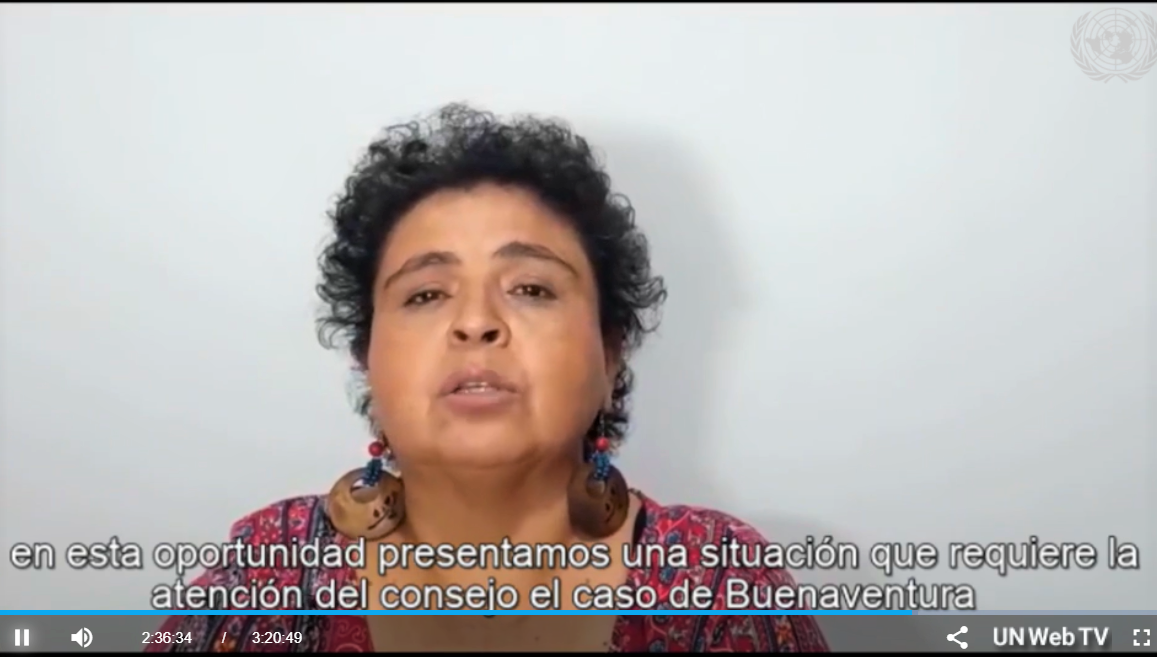
La declaración ha sido pronunciada en el plenario de la 46ª sesión del CDH por María Eugenia Mosquera Riascos, una defensora de los derechos humanos colombiana que ha recibido recientemente amenazas por su trabajo; María Eugenia colabora con Presencia de Paz Peace Presence y es miembro de Conpaz.
Puedes ver la declaracion grabada aqui.

image (5).png

On March 15th International Fellowship of Reconciliation - IFOR addressed the situation in Colombia and called on the member States of the UN Human Rights Council and on the Office of the United Nations High Commissioner for Human Rights "to give attention to the violations in Buenaventura (Colombia), an area where there are many foreign economic interests and to urge the national government to implement the peace agreement, to dismantle the surviving structures of paramilitarism, to fulfil the Acuerdo del Paro Cívico de Buenaventura and to prioritise social investment and not militarisation."
The statement has been delivered in the plenary of the 46th session of the Human Rights Council, by María Eugenia Mosquera Riascos, a Colombian human rights defender who has recently received threats for her work; María Eugenia collaborates with Peace Presence and is a member of Conpaz.

Maru GD 4.png

Human Rights Council, 46th session
Geneva, 15 March 2021
Item 4: Human rights situations that require the Council's attention
Oral statement delivered by the International Fellowship of Reconciliation.


Madam President,

The Final Peace Agreement was an important step towards overcoming the social and armed conflict. However, the government's unwillingness to implement it has made the human rights situation increasingly deplorable.
According to the report presented by the United Nations High Commissioner for Human Rights, "In 2020, 76 massacres were documented, involving the death of 292 people, and 248 peace signatories have been killed". 1
My name is María Eugenia Mosquera Riascos, family member of a victim, human rights defender and member of the Association of Victims Communities Building Peace in Colombia 2.
In this opportunity we present a situation that requires the Council's attention, the case of Buenaventura, Valle del Cauca, where human rights violations, threats, assassinations, forced disappearances, extortion, displacement, dismemberment, confinement, recruitment, sexual violence and expropriation of collective territories are on the rise. Terror is imposed by paramilitary-type structures that operate despite heavy militarisation.
In this context, in January I received threats 3, which are directly related to my work of accompaniment and defence of human rights in this part of the country.
We call on the Member States and the office of the High Commissioner for Human Rights to pay attention to these situations of violations in Buenaventura, an area where there are many foreign economic interests; to exhort the national government to implement the Peace Agreement, to dismantle the remaining paramilitary structures; to comply with the Acuerdo del Paro Cívico de Buenaventura 4, to prioritise social investment and not militarisation.

Thank you.

 [Translated from the original in Spanish]

  1. https://www.hchr.org.co/documentoseinformes/informes/altocomisionado/HRC46-Informe-anual- 2020_traduccion-no-oficial.pdf

  2. CONPAZCOL https://comunidadesconpaz.wordpress.com/

  3. FOR Peace Presence y otras organizaciones escribieron una carta pública sobre estas amenazas

  4. https://www.mininterior.gov.co/content/gobierno-logra-acuerdos-para-levantar-el-paro-civico-en-buenaventura


IFOR collaborates with both organizations for the promotion and protection of human rights and the implementation of peace.

CONPAZ - Comunidades Construyendo Paz en Colombia is a network of 140 victims’ organizations, present in 14 departments where the armed conflict still continues. Apart from its challenging work to strengthen community processes CONPAZ has presented decisive contributions to the peace negotiations in Havana, and is worried about its security situation.

In the framework of the peace negotiations CONPAZ proposed an alternative model of transitional justice, restorative justice, focused on reconciliation and investigation of the truth.

The Fellowship of Reconciliation Peace Presence (FORPP) is a non governmental organization dedicated to providing international accompaniment to communities and individuals at risk in Colombia who are working to promote human rights, peace and justice.

FOR Peace Presence provides physical safety, political visibility and solidarity by accompanying communities and organizations that embrace active nonviolence to defend life, land and dignity. FORPP started as a program of IFOR's U.S.A. branch and then, in 2014, FOR Peace Presence constituted itself as an independent organization.

Comment

IFOR addresses SDGs 2030, civil disobedience and conscientious objection at the UN 46th HRC

Comment

IFOR addresses SDGs 2030, civil disobedience and conscientious objection at the UN 46th HRC

UN global-goals.png

International Fellowship of Reconciliation - IFOR submitted the following statement to the ongoing 46th session of the UN Human Rights Council.


Human Rights Council, 46th Session Geneva, 9th March 2021
Item 3: Promotion and protection of all human rights, civil, political, economic, social and cultural rights
Oral statement submitted by the International Fellowship of Reconciliation.

unnamed.png

Madam President,

The Sustainable Development Goals (SDGs 2030)[1] are a universal call to action to protect the planet and improve the lives and prospects of everyone, everywhere. There are interconnections between all those goals and there is no way we can achieve them unless member States are willing to address injustice, social injustice, climate injustice and to stop wars.

We would like to highlight the concerning links between climate change, hunger, economic sanctions and exploitation, and armed conflicts.[2]

We hear of wars in too many places such as Syria, for instance, as well of violence against protesters such as in Myanmar, Hong Kong and Belarus.

Civil disobedience is a nonviolent tool to resist to violence and injustice; many groups around the world are engaging in nonviolent actions to ask their governments or regimes to respect and restore their human rights. Protesters cannot be shot.

We would also like to draw the attention of this Council to the protection of the right of those who refuse to kill which is still seriously lacking.

The European Bureau for Conscientious Objection (EBCO)[3], highlighted in its annual report[4], that in 2020 conscientious objectors to military service continue to be persecuted and imprisoned in various countries.

In Turkey, Eritrea and Singapore, for instance, the right is not recognized. Turkish objectors are facing a situation of “civil death”[5] which excludes them from social, cultural and economic life.

[In other countries, like Turkmenistan, there is no alternative to compulsory military service[6]. 

In some countries where the right is formally recognized, like in Finland, Israel and Greece, the alternative service provided is often punitive in nature and the decision-making procedures are in contrast with the international standards.]

IFOR calls on all member States to protect the right to conscientious objection to military service in all countries. 

Thank you.


[1] https://sdgs.un.org/goals.
[2] http://www.ifor.org/news/2020/5/19/ifor-open-letter-to-the-un-secretary-general.
[3] https://ebco-beoc.org/.
[4] EBCO’s annual report, covering the region of Council of Europe (CoE), is available at https://ebco-beoc.org/node/491.
[5] The situation of conscientious objectors is defined as “civil death” by European Court of Human Rights. (Ulke v. Turkey, application no. 39437/98).
[6] https://www.ecoi.net/en/document/2025552.html.

You can download the complete statement here


IFOR actively collaborates with EBCO which is the European network for groups and organizations dealing with conscientious objection. EBCO offers support to objectors and engages on advocacy initiatives within the Council of Europe.

IFOR provides assistance at the UN and is currently collaborating with the EBCO's board for related issues.

The European Bureau for Conscientious Objection (EBCO) was founded in 1979 as an umbrella organisation for national associations of conscientious objectors, with the aim of promoting collective campaigns for the release of the imprisoned conscientious objectors and lobbying the European governments and institutions for the full recognition of the right to conscientious objection to military service.

EBCO, on an yearly basis, releases an Annual Report on the situation of conscientious objection in the Council of Europe geographical area.

You can find details on the 2020 Annual Report here

IFOR has been closely involved in the redaction of such Reports in the past years as part of the ongoing IFOR project on conscientious objection funded by the Joseph Rowntree Charitable Trust - JRCT.

You can find more information on EBCO here

EBCO_logo (1).jpg

Comment

IFOR at the 46th session of the UN Human Rights Council: "immediate and unconditional release of all imprisoned conscientious objectors"

Comment

IFOR at the 46th session of the UN Human Rights Council: "immediate and unconditional release of all imprisoned conscientious objectors"

International Fellowship of Reconciliation - IFOR has delivered an oral statement on conscientious objection to military service at the 46th session of the UN Human Rights Council during the Interactive Dialogue with the Special Rapporteur on Freedom of religion or belief which was held on March 4th 2021.

The statement, delivered by the Main representative of IFOR at the UN Z. Zafarana, refers to the need of immediate and unconditional release of all imprisoned conscientious objectors.
You can download the original version of the statement here.


possible title image (2).png

Human Rights Council, 46th Session

Geneva, 4th March 2021 

Item 2: Interactive dialogue with the Special Rapporteur on the freedom of religion or belief 

Oral statement delivered by the International Fellowship of Reconciliation.

Madam President,

IFOR thanks the Special Rapporteur for his thematic report[1].

The right to Conscientious objection to military service is inherent to the right to freedom of thought, conscience and religion. 

However, conscientious objectors continue to be imprisoned in various countries, such as Turkmenistan[2], Singapore[3], Eritrea[4], Tajikistan[5], Israel[6], for instance, and this constitutes a violation of international human rights law.

We encourage and support the Special Rapporteur on freedom of religion or belief in his long-standing efforts for the immediate and unconditional release of all imprisoned conscientious objectors.

IFOR urges the respect of international standards for the exercise of the right to conscientious objection.

In Colombia, for instance, the competence to recognise the right to conscientious objection lies with the same authority that carries out military recruitment, which denotes a lack of objectivity and impartiality that delegitimizes its exercise through a process that prioritises evidence over substance. This procedural treatment generates gaps of inequality and discrimination between those who can provide evidence backed by an ecclesiastical authority and those who do not have this possibility. An example is given by the response[7] to the conscientious objector Sergio Sáenz[8], who based his declaration on non-religious beliefs.

Thank you.


  1. Report on Countering Islamophobia/Anti-Muslim Hatred to Eliminate Discrimination and Intolerance Based on Religion or Belief. https://www.ohchr.org/EN/Issues/FreedomReligion/Pages/HatredAndDiscrimination.aspx.

  2. https://www.ecoi.net/en/document/2025552.html.

  3. https://www.jw.org/en/news/legal/by-region/singapore/jehovahs-witnesses-in-prison/.

  4. ttps://www.ohchr.org/EN/HRBodies/HRC/Pages/NewsDetail.aspxNewsID=26439&LangID=E.

  5. https://www.forum18.org/archive.php?article_id=2629.

  6. https://www.timesofisrael.com/israeli-conscientious-objector-released-from-militaryprison/.

  7. Response to File No. 531228 dated 26 January 2021. “A través del cual le exigen (i) número de resolución de la entidad emitida por el Ministerio del Interior. (ii) certificado de existencia y representación de la Institución a la que pertenece; (iii) certificado de vinculación del líder religioso que emite certificación, (iv) no se indica fecha ni certificados de sacramentos recibidos en el marco de la religión católica;  (v) sede donde regularmente se congrega, actividades específicas que realiza, horarios, programa de estudios, (vi) números telefónicos de feligreses que indiquen bajo la gravedad de juramento que han sido testigos de sus actividades religiosas (iv)  demás documentos y elementos de prueba (fotos, videos etc..) que acrediten la sinceridad de sus convicciones; es decir, que sean claras, profundas, fijas y sinceras en que fundamenta su solicitud.”

  8. His request was not processed because he had to belong to a legally constituted church that would certify it, and he had to have the testimony of two or more members of the congregation who, under oath, would certify his status as a conscientious objector within the church."


You can watch here the UN interactive dialogue referred to above. IFOR statement is at 02:04:17 [insert the hyperlink http://webtv.un.org/.../id-sr-on-religion.../6237146868001


IFOR has recently submitted a report on the issue of conscientious objection in Singapore for the 38th UN UPR. You can find it here.


IFOR follows closely the issue of conscientious objection in Colombia and collaborates with ACOOC - Colombian Collective Action of Conscientious Objectors.

ACOOC works in the field of accompaniment of conscientious objectors; it supports conscientious objectors in their struggle against discrimination and to achieve recognition by the Colombian government, advises young people who are victims of illegal recruitment practices by the military and is working towards the full implementation of the right to conscientious objection by the Colombian government.

Comment