Comment

Call for international protection for Maksim Kuzmin, a Russian War Resister

Français en-dessous

IFOR, with  Human Rights organisations, expresses concern  over the immediate risk of deportation of Maksim Kuzmin, a Russian war resister, to the Russian Federation 

March 30h 2026

The undersigned organisations express their serious concern regarding the immediate risk of deportation of Maksim Kuzmin back to Russia, as he is approaching a yet another—and probably the ultimate— hearing on April 2nd 2026 at the Regional Administrative Court in Kaunas, Lithuania. 

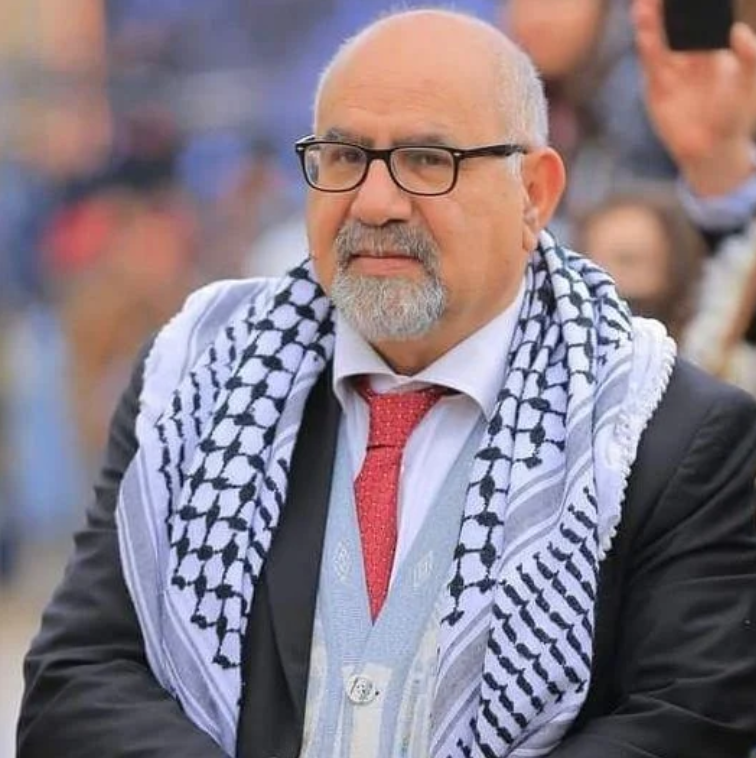
Maksim Kuzmin is a Russian citizen from Kaliningrad and a reserve military officer who refused to support the illegal war of aggression in Ukraine and started to engage in anti-war activities and eventually was forced to flee his country and seek protection abroad. He applied for protection in Lithuania where he has been declared a threat to national security, placing him under immediate risk. 

Background 

Following the beginning of Russia’s full-scale invasion of Ukraine in February 2022, Maksim Kuzmin publicly condemned the war and decided to leave Russia permanently. 

From 1995 to 2000 he studied at the Military Engineering Academy. After graduating, he served for one year in the construction administration of the Moscow Military District, where he worked on the construction of housing for military personnel. In 2002 he left the army and subsequently spent more than twenty years working in the civilian construction sector and in business. 

In November 2022 he moved to Lithuania with his family and applied for a residence permit. 

Decisions of the migration authorities and court proceedings 

The Lithuanian Migration Department refused to grant him a residence permit and declared him a threat to national security, citing his education at a military academy more than twenty years ago. 

Maksim Kuzmin challenged this decision in court and won the case: the court annulled both the deportation order and the entry ban. The Supreme Court of Lithuania subsequently upheld this ruling. 

Despite these decisions, in 2023 he was detained and had to apply for asylum in order to avoid imminent deportation to Russia. 

In 2024 the Migration Department again refused to grant Maksim Kuzmin asylum and ordered his deportation to the Russian Federation, despite previous court rulings establishing that he does not pose a threat to national security. 

In January 2026 he submitted complaints to the Prosecutor General’s Office, the Ministry of the Interior and other Lithuanian state institutions, arguing that deportation to Russia would put his safety at risk due to his anti-war position and his status as a reserve officer. 

Civic engagement in Lithuania 

During his time in Lithuania, Maksim Kuzmin has been actively involved in public life. He organised a running community and helped launch the international parkrun project in Vilnius. According to the organisers, these events brought thousands of sports tourists to the city. He has also participated in anti-war demonstrations and charity sporting events supporting Russian war resisters, as well as fundraising initiatives to assist Ukraine. 

Call for international protection 

The undersigned organizations are alarmed that because Maksim Kuzmin is a consistent and genuine conscientious objector to war, there are substantial grounds to believe that if returned to the Russian Federation he could face mobilisation and be forcibly sent to fight in the war against Ukraine, where he could be compelled to participate in war crimes under threat of violence or severe punishment. 

During his time in Lithuania, he has given no reason whatsoever to suggest that he supports Russia’s criminal war against Ukraine. 

We call thus for immediate international protection for Maxim Kuzmin. 

Appeal to the Lithuanian Court 

In light of the above, we respectfully call on the Court to: 

  • carefully examine all circumstances of the case; 

  • take into account previous court rulings confirming that Maksim Kuzmin does not constitute a threat to national security; 

  • consider the real risk of mobilisation and persecution should he be deported to Russia; 

  • ensure compliance with international obligations concerning the protection of refugees and human rights; 

  • provide Maksim Kuzmin with the opportunity to obtain international protection. 


We recall that protecting individuals who refuse to participate in a war of aggression -that violates international law and involves crimes against humanity- and those who exercise the human right to conscientious objection to military service is prescribed by international human rights law and standards. 

We, finally, call on the Lithuanian authority to fully align with international standards and duly implement the UNHCR Guidelines on International Protection n. 10 (note 1).

Note 1 - https://www.unhcr.org/media/guidelines-international-protection-no-10-claims-refugee-status-related-military-service

Signing organizations (in alphabetical order) 

  1. Aktionsgemeinschaft Dienst für den Frieden (AGDF) – Germany 

  2. Association of the Greek Conscientious Objectors – Greece 

  3. Associazione Good Samaritan – Italy 

  4. Center for Encounter and active Non-violence – Austria 

  5. Center on Conscience & War – USA 

  6. Centro Gandhi di Ivrea – Italy 

  7. Community of Christ, British Isles Mission Center – United Kingdom 

  8. Connection e.V. 

  9. Conscientious Objection Watch – Turkey 

  10. Coordination des Associations et des Particuliers pour la Liberté de Conscience – France 

  11. European Bureau for Conscientious Objection (EBCO) 

  12. Fellowship of Reconciliation – USA 

  13. FemArtAct Social Cooperative – Greece 

  14. FOR India (Indian branch of IFOR) – India 

  15. FOR Zimbabwe (Zimbabwean branch of IFOR) – Zimbabwe 

  16. German Peace Society-United War Resisters (DFG-VK) – Germany

  17. Giuristi Democratici – Italy 

  18. Initiative for Conscientious Objection in Cyprus – Cyprus 

  19. INNATE – Ireland 

  20. Institute of Peace and Law – Ukraine 

  21. International Fellowship of Reconciliation (IFOR) 

  22. International Peace Bureau (IPB) 

  23. Internationale der Kriegsdienstgegner*innen (IDK) 

  24. Internationaler Versöhnungsbund (Austrian branch of IFOR) – Austria 

  25. Kerk en Vrede – Netherlands 

  26. Mesarvot – Israel 

  27. MIR Italy (Italian branch of IFOR) – Italy 

  28. MIR-France (French branch of IFOR) – France 

  29. Our House – Belarus & Lithuania 

  30. Peace Movement of Leuven – Belgium 

  31. Pressenza International - Press Agency for Peace and Noviolence 

  32. Stop Fuelling War, Cesser d’alimenter la guerre – France 

  33. Stoparmy Movement – Russia 

  34. Un ponte per – Italy 

  35. Vrede vzw – Belgium 

  36. Vredesactie – Belgium 

  37. War Resisters’ International (WRI) 

  38. World Without War – South Korea 


Des organisations de défense des droits humains expriment leur inquiétude face au risque imminent d'expulsion vers la Fédération de Russie de Maksim Kuzmin, objecteur de conscience russe


30 mars 2026


Les organisations soussignées expriment leur profonde inquiétude face au risque immédiat d'expulsion de Maksim Kuzmin vers la Russie, alors qu'il s'apprête à comparaître pour une nouvelle - et probablement la dernière fois - le 2 avril 2026 devant le tribunal administratif régional de Kaunas, en Lituanie. Maksim Kuzmin est un citoyen russe, originaire de Kaliningrad et un officier de réserve qui a refusé de soutenir la guerre d’agression illégale en Ukraine et a commencé à s’engager dans des activités anti-guerre, ce qui l’a finalement contraint à fuir son pays et à chercher refuge à l’étranger. Il a demandé l’asile en Lituanie, où il est considéré comme une menace pour la sécurité nationale, ce qui le met en danger de façon imminente.


Contexte


À la suite du déclenchement de l'invasion à grande échelle de l'Ukraine par la Russie en février 2022, Maksim Kuzmin a publiquement condamné la guerre et a décidé de quitter définitivement la Russie. De 1995 à 2000, il a étudié à l'Académie d'ingénierie militaire. Après avoir obtenu son diplôme, il a servi pendant un an au sein de l'administration des travaux publics du district militaire de Moscou, où il a travaillé à la construction de logements pour le personnel militaire. En 2002, il a quitté l'armée et a ensuite passé plus de vingt ans à travailler dans le secteur civil de la construction et dans le monde des affaires. En novembre 2022, il s'est installé en Lituanie avec sa famille et a demandé un permis de séjour.


Décisions des autorités chargées de l'immigration et procédures judiciaires


Le Service lituanien de l'immigration a refusé de lui accorder un permis de séjour et a décidé qu’il est une menace pour la sécurité nationale, invoquant sa formation à l'Académie militaire il y a plus de vingt ans. Maksim Kuzmin a contesté cette décision devant les tribunaux et a obtenu gain de cause : le tribunal a annulé à la fois l'ordre d'expulsion et l'interdiction d'entrée sur le territoire. La Cour suprême de Lituanie a, par la suite, confirmé ce jugement. Malgré ces décisions, il a été placé en détention en 2023 et a dû demander l'asile afin d'éviter une expulsion imminente vers la Russie.


En 2024, le Service des migrations a de nouveau refusé d'accorder l'asile à Maksim Kuzmin et a ordonné son expulsion vers la Fédération de Russie, malgré les décisions judiciaires antérieures établissant qu'il ne représentait pas une menace pour la sécurité nationale. En janvier 2026, il a porté plainte auprès du bureau du procureur général, du ministère de l'Intérieur et d'autres institutions publiques lituaniennes, arguant que son expulsion vers la Russie mettrait sa sécurité en danger en raison de sa position anti-guerre et de son statut d'officier de réserve.


Engagement civique en Lituanie


Pendant son séjour en Lituanie, Maksim Kuzmin s'est activement impliqué dans la vie publique. Il a organisé une communauté de coureurs et contribué au lancement du projet international parkrun à Vilnius. Selon les organisateurs, ces événements ont attiré des milliers de touristes sportifs dans la ville. Il a également participé à des manifestations contre la guerre et à des événements sportifs caritatifs en soutien aux résistants russes à la guerre, ainsi qu’à des initiatives de collecte de fonds pour venir en aide à l’Ukraine.


Appel à la protection internationale


Les organisations soussignées s’alarment du fait que, Maksim Kuzmin, étant un objecteur de conscience sincère et de longue date, il existe des motifs sérieux de croire que, s’il était renvoyé en Fédération de Russie, il risquerait d’être mobilisé et envoyé de force combattre dans la guerre contre l’Ukraine, où il pourrait être contraint de participer à des crimes de guerre sous la menace de violences ou de sanctions sévères. Au cours de son séjour en Lituanie, il n’a donné aucune raison de penser qu’il soutient la guerre criminelle menée par la Russie contre l’Ukraine. Nous demandons donc une protection internationale immédiate pour Maksim Kuzmin.

Appel à la Cour lituanienne

Compte tenu de ce qui précède, nous demandons respectueusement à la Cour :

• d’examiner attentivement toutes les circonstances de l’affaire ;

• de prendre en compte les décisions judiciaires antérieures confirmant que Maksim Kuzmin ne constitue pas une menace pour la sécurité nationale ;

• de tenir compte du risque réel de mobilisation et de persécution s’il venait à être expulsé vers la Russie ;

• de garantir le respect des obligations internationales en matière de protection des réfugiés et des droits de l’homme ;

• d’offrir à Maksim Kuzmin la possibilité d’obtenir une protection internationale.

Nous rappelons que la protection des personnes qui refusent de participer à une guerre d’agression – qui viole le droit international et implique des crimes contre l’humanité – et de celles qui exercent leur droit à l’objection de conscience au service militaire est prescrite par le droit international et les normes internationales.

Enfin nous appelons les autorités lituaniennes à se conformer pleinement aux normes internationales et à mettre dûment en œuvre les Principes directeurs n° 10 du HCR relatifs à la protection internationale.

Organisations signataires (voir la liste au-dessus)


Comment

Comment

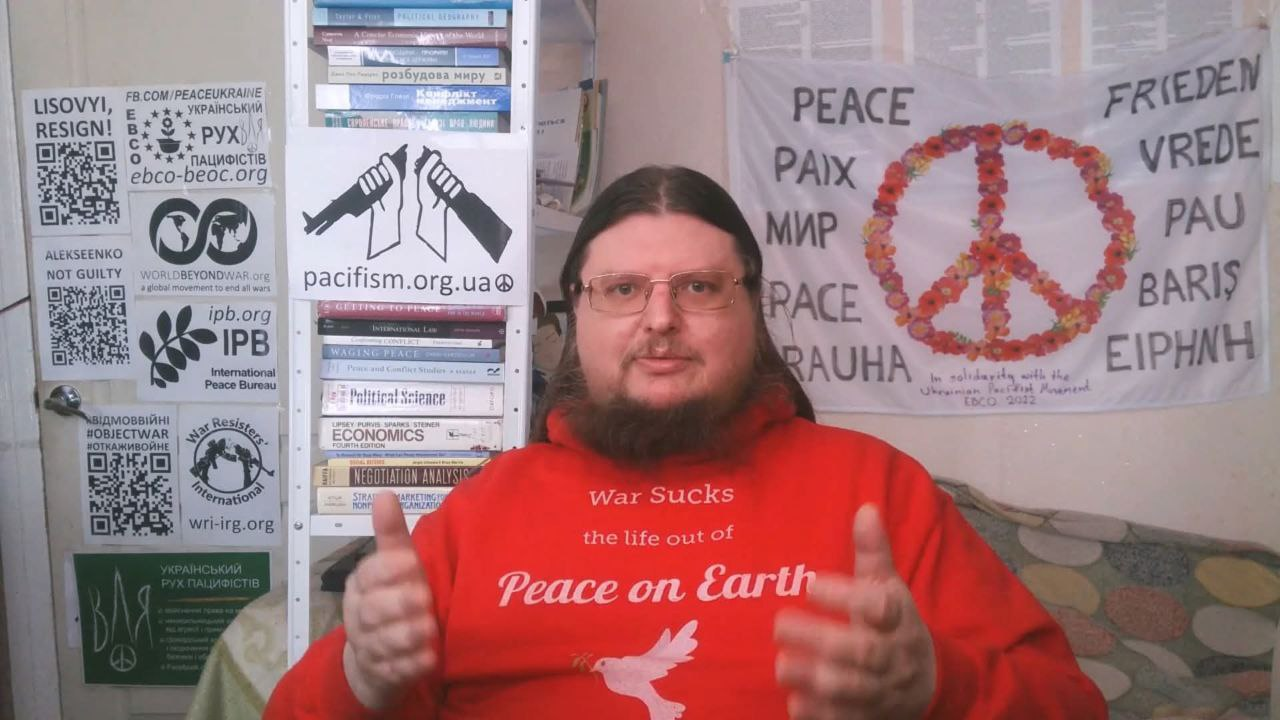
IFOR supports Yurii Sheliazhenko and calls for his release

Français ci-dessous - Español a continuación

URGENT statement about the unlawful detention and deprivation of liberty of Yurii Sheliazhenko by the Ukrainian police and military authorities

The undersigned organisations are shocked by the detention and deprivation of liberty of human rights defender Yurii Sheliazhenko, today March 19th, by the Ukrainian authorities in Kyiv. This is just weeks after a joint call to the authorities to withdraw from such persecutions of conscientious objectors and withdraw their ongoing persecution of Mr. Sheliazhenko.

According to the information available, Mr. Sheliazhenko was apprehended by officers of the Pechersk District Police in Kyiv without a proper legal basis and without compliance with the procedural safeguards required by Ukrainian law. In particular, there are indications that:

– no detention protocol was drawn up;
– no clear legal grounds for the deprivation of liberty were provided;
– access to legal counsel was obstructed;
– contact with the Ukrainian State Bureau of Investigation was obstructed;
– he was transferred, or intended to be transferred, to a Territorial Centre of Recruitment and Social Support (TCC) without due legal procedure.

We note that any involvement of the TCC does not exclude the responsibility of law enforcement officers for the initial deprivation of liberty. These actions may constitute violations of the Constitution of Ukraine and the European Convention on Human Rights, in particular Article 5 (right to liberty and security), and Article 9 of the International Covenant on Civil and Political Rights (ICCPR).

Yurii Sheliazhenko is a well-known conscientious objector, publicly declared since 1998, a pacifist and a human rights defender. He is also an academic, the executive secretary of the Ukrainian Pacifist Movement (member organisation of War Resisters International), Director of the Institute of Peace and Law in Ukraine, and a Board member of the European Bureau for Conscientious Objection and of World Beyond War.

Tragically, he has previously reported on the cruel practices of "busification", forced conscription and compulsory military registration occurring in Ukraine, which in some cases have even led to tortures and deaths in military recruitment centers.

We strongly condemn all these actions as grave human rights violations that have no place in democratic countries.

We urge the Ukrainian authorities to immediately release Yurii Sheliazhenko and cease all procedures of forced conscription.

We remind that his case has been previously included in a Communication by the Mandates of the Special Rapporteur on the rights to freedom of peaceful assembly and of association; the Special Rapporteur on minority issues and the Special Rapporteur on freedom of religion or belief. The case of Mr. Sheliazhenko, the communication of the Special Rapporteurs and the response of the Ukrainian authorities were highlighted also by the OHCHR, in its report concerning Conscientious objection to military service, and particularly in the chapter titled “Refrain from unduly restricting the human rights of those representing or advocating for the rights of conscientious objectors”. His case has been highlighted also in Amnesty International’s Annual Report 2023/2024.

We repeat our call to the international community to exercise all proper actions to ensure that human rights defenders and peace activists are not criminalised for their actions for peace and nonviolence; moreover, that the right to conscientious objection is fully implemented in line with international standards and that conscientious objectors are provided with the necessary protection against persecution in their country of origin, also with asylum.

Connection e.V.

European Bureau for Conscientious Objection

International Fellowship of Reconciliation

War Resisters' International

Communiqué urgent concernant la détention illégale et la privation de liberté de Yurii Sheliazhenko par la police et les autorités militaires ukrainiennes

Les organisations soussignées sont choquées par la détention et la privation de liberté du défenseur des droits humains Yurii Sheliazhenko, aujourd’hui 19 mars, par les autorités ukrainiennes à Kiev. Cela survient quelques semaines seulement après un appel conjoint lancé aux autorités pour qu’elles mettent fin à ces persécutions à l’encontre des objecteurs de conscience et cessent de persécuter M. Sheliazhenko.

Selon les informations disponibles, M. Sheliazhenko a été appréhendé par des agents de la police du district de Pechersk à Kiev sans fondement juridique valable et sans que les garanties procédurales requises par la loi ukrainienne aient été respectées. En particulier, certains éléments indiquent que :

– aucun procès-verbal de détention n’a été établi ;

– aucun motif juridique clair justifiant la privation de liberté n’a été fourni ;

– l’accès à un avocat a été entravé ;

– le contact avec le Bureau d’enquête de l’État ukrainien a été entravé ;

– il a été transféré, ou était sur le point d’être transféré, vers un Centre territorial de recrutement et de soutien social (TCC) sans procédure légale régulière.

Nous notons que toute implication du TCC n'exclut pas la responsabilité des agents des forces de l'ordre dans la privation initiale de liberté. Ces actions peuvent constituer des violations de la Constitution ukrainienne et de la Convention européenne des droits de l'homme, en particulier de l'article 5 (droit à la liberté et à la sécurité) et de l'article 9 du Pacte international relatif aux droits civils et politiques (PIDCP).

Yurii Sheliazhenko est un objecteur de conscience bien connu, ayant déclaré publiquement son statut depuis 1998, un pacifiste et un défenseur des droits humains. Il est également universitaire, secrétaire exécutif du Mouvement pacifiste ukrainien (organisation membre de War Resisters International), directeur de l’Institut pour la paix et le droit en Ukraine, et membre du conseil d’administration du Bureau européen pour l’objection de conscience et de World Beyond War.

Malheureusement, il a déjà dénoncé les pratiques cruelles de « busification », de conscription forcée et d’enregistrement militaire obligatoire en Ukraine, qui ont dans certains cas même conduit à des actes de torture et à des décès dans les centres de recrutement militaire.

Nous condamnons fermement toutes ces actions, qui constituent de graves violations des droits humains et n’ont pas leur place dans des pays démocratiques.

Nous exhortons les autorités ukrainiennes à libérer immédiatement Yurii Sheliazhenko et à mettre fin à toutes les procédures de conscription forcée.

Nous rappelons que son cas a déjà fait l’objet d’une communication des mandats du Rapporteur spécial sur les droits à la liberté de réunion pacifique et d’association, du Rapporteur spécial sur les questions relatives aux minorités et du Rapporteur spécial sur la liberté de religion ou de conviction. Le cas de M. Sheliazhenko, la communication des rapporteurs spéciaux et la réponse des autorités ukrainiennes ont également été mis en avant par le HCDH dans son rapport sur l’objection de conscience au service militaire, et plus particulièrement dans le chapitre intitulé « S’abstenir de restreindre indûment les droits fondamentaux des personnes qui représentent ou défendent les droits des objecteurs de conscience ». Son cas a également été mis en avant dans le rapport annuel 2023/2024 d’Amnesty International.

Nous réitérons notre appel à la communauté internationale afin qu’elle prenne toutes les mesures appropriées pour garantir que les défenseurs des droits de l’homme et les militants pour la paix ne soient pas criminalisés pour leurs actions en faveur de la paix et de la non-violence ; en outre, que le droit à l’objection de conscience soit pleinement mis en œuvre conformément aux normes internationales et que les objecteurs de conscience bénéficient de la protection nécessaire contre la persécution dans leur pays d’origine, y compris par l’octroi de l’asile.

Connection e.V.

European Bureau for Conscientious Objection

International Fellowship of Reconciliation

War Resisters' International

Comunicado urgente sobre la detención ilegal y la privación de libertad de Yurii Sheliazhenko por parte de la policía y las autoridades militares ucranianas

Las organizaciones abajo firmantes están consternadas por la detención y privación de libertad del defensor de los derechos humanos Yurii Sheliazhenko, hoy 19 de marzo, por parte de las autoridades ucranianas en Kiev. Esto ocurre apenas unas semanas después de que se lanzara un llamamiento conjunto a las autoridades para que pusieran fin a estas persecuciones contra los objetores de conciencia y dejaran de perseguir al Sr. Sheliazhenko.

Según la información disponible, el Sr. Sheliazhenko fue detenido por agentes de la policía del distrito de Pechersk en Kiev sin fundamento jurídico válido y sin que se respetaran las garantías procesales exigidas por la legislación ucraniana. En particular, hay indicios de que:

– no se ha levantado acta de detención;

– no se ha proporcionado ningún motivo jurídico claro que justifique la privación de libertad;

– se ha obstaculizado el acceso a un abogado;

– se ha obstaculizado el contacto con la Oficina de Investigación del Estado de Ucrania;

– fue trasladado, o estaba a punto de ser trasladado, a un Centro Territorial de Reclutamiento y Apoyo Social (TCC) sin un procedimiento legal regular.

Observamos que cualquier implicación del TCC no excluye la responsabilidad de los agentes de las fuerzas del orden en la privación inicial de libertad. Estas acciones pueden constituir violaciones de la Constitución de Ucrania y del Convenio Europeo de Derechos Humanos, en particular el artículo 5 (derecho a la libertad y a la seguridad) y el artículo 9 del Pacto Internacional de Derechos Civiles y Políticos (PIDCP).

Yurii Sheliazhenko es un conocido objetor de conciencia, que ha declarado públicamente su condición desde 1998, pacifista y defensor de los derechos humanos. También es académico, secretario ejecutivo del Movimiento Pacifista Ucraniano (organización miembro de War Resisters International), director del Instituto para la Paz y el Derecho en Ucrania, y miembro del consejo de administración de la Oficina Europea para la Objeción de Conciencia y de World Beyond War.

Lamentablemente, ya ha denunciado las crueles prácticas de «busificación», reclutamiento forzoso y registro militar obligatorio en Ucrania, que en algunos casos han llegado incluso a provocar actos de tortura y muertes en los centros de reclutamiento militar.

Condenamos firmemente todas estas acciones, que constituyen graves violaciones de los derechos humanos y no tienen cabida en países democráticos.

Instamos a las autoridades ucranianas a que liberen inmediatamente a Yurii Sheliazhenko y pongan fin a todos los procedimientos de reclutamiento forzoso.

Recordamos que su caso ya ha sido objeto de una comunicación por parte de los mandatos del Relator Especial sobre el derecho a la libertad de reunión pacífica y de asociación, del Relator Especial sobre cuestiones relacionadas con las minorías y del Relator Especial sobre la libertad de religión o de creencias. El caso del Sr. Sheliazhenko, la comunicación de los relatores especiales y la respuesta de las autoridades ucranianas también fueron destacados por el ACNUDH en su informe sobre la objeción de conciencia al servicio militar, y más concretamente en el capítulo titulado «Abstenerse de restringir indebidamente los derechos fundamentales de las personas que representan o defienden los derechos de los objetores de conciencia». Su caso también se ha destacado en el informe anual 2023/2024 de Amnistía Internacional.

Reiteramos nuestro llamamiento a la comunidad internacional para que adopte todas las medidas adecuadas a fin de garantizar que los defensores de los derechos humanos y los activistas por la paz no sean criminalizados por sus acciones en favor de la paz y la no violencia; además, que se aplique plenamente el derecho a la objeción de conciencia de conformidad con las normas internacionales y que los objetores de conciencia gocen de la protección necesaria contra la persecución en su país de origen, incluida la concesión de asilo.

Connection e.V.

European Bureau for Conscientious Objection

International Fellowship of Reconciliation

War Resisters' International

Comment

Comment

Solidarity with the resisters in Minneapolis

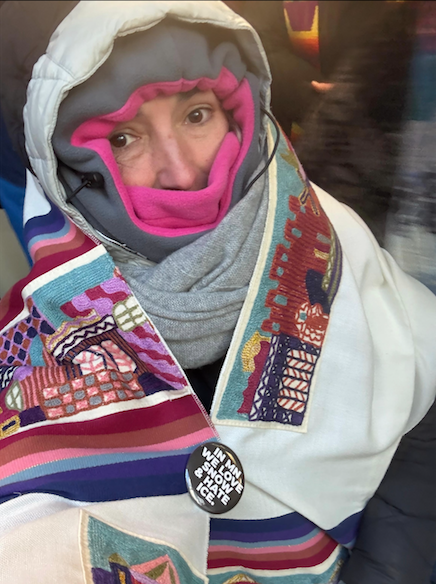
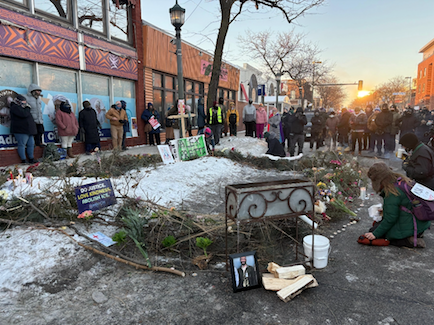
Ariel Gold, member of the International Committee of IFOR, was yesterday in Minneapolis with hundreds of religious leaders from all the USA to express solidarity and support to the local protesters against and resisters to the ICE policy in their city and their state, including FOR US members. She was arrested, wearing Jewish prayer shawl. It was - 29° C.
Unfortunately one protester, Alex Pretti, a 37-year old nurse, was killed by the Federal agents during the demonstration as he had failed on the ground and was surrounded by several agents. Ariel had the occasion to pray on the place where he was killed.


Comment

Comment

Venezuela: Peace and Justice Do Not Emerge from War and Militarism

Photo Credits: suga-suga-wUjeq4KIvyk-unsplash

IFOR welcomes and supports this statement from FOR-USA (its US branch) and its allies on the US aggression of Venezuela

A Statement on the U.S. Invasion of Venezuela and Its Aftermath

January 9, 2026

The Fellowship of Reconciliation and its allies in the undersigned peace and justice movements join the chorus of voices across the United States and around the world in denouncing U.S. military intervention in the early morning of January 3, 2026, to capture President Nicholas Maduro and Cilia Flores and bring them to the United States. We express grave concern about the ongoing situation in Venezuela and the massive needs of its people. 

This violation of Venezuela’s sovereignty is illegal under international law, including the Charter of the United Nations and the Charter of the Organization of American States, and U.S. law, including the Constitution and the War Powers Act. Unfortunately, it is part of a long-standing pattern of domination by the United States of the Western Hemisphere and other regions through direct military intervention, covert operations, the erosion of international laws and norms, and the use of U.S. criminal law and courts to police foreign nations and their leaders.  

Almost sixty years ago, Rev. Dr. Martin Luther King, Jr. delivered a speech to thousands of faith leaders in which he “broke the silence” on his opposition to the U.S. war in Vietnam. As Dr. King described the devastating interconnection of militarism, racism, and extreme materialism in the context of that war effort, he stated, “We are adding cynicism to the process of death, for they must know after a short period there that none of the things we claim to be fighting for are really involved.” Therefore, the attack on Venezuela is not only illegal, it is also immoral. It should be opposed and resisted by people of faith and goodwill.

Throughout the past year, the U.S. has targeted the Venezuelan people and their government with a wide range of actions and belligerent statements. In early 2025, the Trump administration cancelled Temporary Protected Status (TPS) for more than 600,000 Venezuelans living in the United States. Thousands of Venezuelans were then confirmed deported last year, including some sent to El Salvador to be incarcerated in a “torture prison” known as CECOT. The administration’s usage of the Alien Enemies Act to claim authority for those mass deportations was ruled illegal by the U.S. Supreme Court in a remarkably unanimous 9-0 decision.

Starting in September 2025, the U.S. began attacking Venezuelan vessels in international waters, saying without substantiation that they were being used to smuggle illegal drugs to the United States. Such unprovoked attacks on small boats in the Caribbean have killed more than 100 people and raised serious accusations that the U.S. military committed war crimes. In December, the U.S. seized an oil tanker off Venezuela’s coast, sparking fears that it was seeking to take over the nation’s massive oil reserves

The failure of the U.S. administration to provide clear and consistent explanations about this past weekend’s dramatic military action raises profound concerns: legally, ethically, and in terms of humanitarian commitments. Failure to provide information about plans for a political transition—and threats of further military action—deepens the anxiety of Venezuelans in the country and in the diaspora. We recognize that many Venezuelans who have suffered from economic privation or the suppression of human rights are now celebrating the possibility of change in their country. Yet those hopes are mixed with grave concern for the future, with a fractured state and massive humanitarian needs. 

During his April 1967 address, Dr. King quoted from a letter he had received from a Buddhist monk – likely Thich Nhat Hanh, whom Dr. King had recently nominated for the Nobel Peace Prize. In words that echo hauntingly today, the monk wrote: “The Americans are forcing even their friends into becoming their enemies. It is curious that the Americans, who calculate so carefully on the possibilities of military victory, do not realize that in the process they are incurring deep psychological and political defeat. The image of America will never again be the image of revolution, freedom, and democracy, but the image of violence and militarism.” 

If human rights, democracy, and the well-being of the Venezuelan people were at the forefront of U.S. concerns, a well-documented case for advancing these issues would have been put forward by the U.S. administration to Congress and international allies over months. Furthermore, if concern about the supply of illegal drugs in the United States were indeed the primary concern, as had been suggested, President Trump would not have pardoned former Honduran President Juan Hernandez just last month, who had been convicted of drug trafficking in 2024 and sentenced to 45 years in prison. 

Instead, to many, the attack on Venezuela evokes the long, documented legacy of U.S. imperialism in Latin America and the Caribbean and its efforts to extract and command fossil fuels and natural resources. The action has disturbing parallels to wars against Iraq and efforts at regime change throughout the Middle East and the Americas. It is painfully reminiscent of the U.S. invasion of Panama in 1989 to capture President Manuel Noriega to stand trial for alleged drug crimes. That war was promoted to overcome the so-called “Vietnam Syndrome” and signaled a period of more aggressive military force around the world. At that time, FOR (USA) worked with other NGOs to document that civilian deaths were much higher than official reports. 

The Fellowship of Reconciliation, the oldest interfaith peace organization in the United States, and the undersigned organizations reiterate that peace and justice do not result from military action and violence. We call on people of faith and goodwill to take the following actions: 

·      Remain attentive to the ongoing crisis in Venezuela. Listen to the voices of the Venezuelan people in Venezuela and listen to Venezuelans in the diaspora, recognizing that there are many and diverse opinions about matters of national consequence.

·      Demand accountability of the U.S. administration for its actions through Congressional action and protest, and call on Congress to (1) investigate this action as well as the military strikes on boats in the Caribbean, and (2) oppose any form of U.S. military or political occupation of Venezuela.

·      Support efforts to protect refugees, asylum seekers, and immigrants in the United States, drawing on the teachings of our many spiritual traditions that center these commitments. Support the humanitarian needs of the Venezuelan people, both within their home country and its millions of refugees.

·      Oppose efforts by the U.S. and multinational corporations to extract and assume ownership of Venezuela’s natural resources, including its oil reserves.

·      Protest expansionist intentions by the U.S. as well as any efforts to military intervene in other countries with which it has political interest or conflict, including Cuba, Colombia, Iran, and Greenland.

As members of FOR-USA, Peace Fellowships and allied movements, and as people of faith and conscience from many backgrounds, we know that peace is a daily practice. Achieving peace in the world is sparked by ordinary people practicing active nonviolence, engaging in open dialogue, creating relationships of mutual respect and care, and challenging violence and structures of injustice that diminish the well-being of all people. So, as we call for sovereignty and self-determination for the Venezuelan people, and justice and accountability for the U.S. military actions that have profoundly upended our hemisphere, we simultaneously resolve to maintain our own practices in order to collectively build the Beloved Community and ensure a shared peaceful future.

Endorsed by:

·      Fellowship of Reconciliation (FOR-USA)

·      InterReligious Task Force on Central America

·      Episcopal Peace Fellowship

·      Jewish Peace Fellowship 

·      Muslim Peace Fellowship

·      Disciples Peace Fellowship

·      Presbyterian Peace Fellowship

·      National Council of Elders

·      Vidas Viequenses Valen (Vieques Lives Matter)

Comment

Comment

Christmas message

FR en dessous, ES abajo

Dear  all, 

As Christmas approaches, may we prepare not only our homes, but our hearts. May our streets not only shine with lights, but may our faith be rekindled, our courage renewed, and our commitment to justice deepened.

May love be reborn within us, agape rooted in our hearts, forgiveness given intentional space, and transformation dwelling in our spirits, so that hope may rise again in our minds and souls.
Christ is coming—peace to every heart, especially to those most burdened, grieving, or under siege.

Let us dare to hope that 2026 brings a peace grounded in justice, where rights are rendered, dignity is protected, and a culture of acceptance and solidarity grows. Let us be people who care for one another and who care tenderly for the environment, the land, and all living beings.

In this spirit, we say thank you—for all that you are doing, and all that is being done, to build a more peaceful, sustainable, equitable, and just world for us all.

Christmas is here, knocking at your door, whispering gratitude for your willingness to walk alongside us again this year, despite all challenges, difficulties, and obstacles. Your steadfast commitment to building bridges between people, strengthening peace, and spreading the messages of nonviolence and reconciliation is one of the essential lights that keeps us moving along this less-traveled road. It is what allows us to keep celebrating life, and to enter this season with moments of joy, courage, and serenity.

We thank you again for walking with us, and we look forward to continuing our peacebuilding journey together. 

A Christmas Wish for Peace: Global Conflicts and the Work of Hope

As the world marks the Christmas season—a time of hope, justice-seeking, goodwill, empathy, and compassion—it is necessary to pause and reflect on the state of our world. So many conflicts and wars continue to scar the lives of tens of millions of people. In a season that proclaims “peace on earth,” it can feel overwhelming to hold the weight of ongoing wars and struggles across the Middle East, Africa, Asia, Europe, and the Caribbean. We must not forget, especially, the ongoing Palestinian struggle for liberation and the suffering in Gaza and the West Bank.

Yet just as Christmas speaks of new beginnings, it also invites us to ask how we can take part in healing, how we can become agents of change, and how we can embody peace in action, not only in words.

Wars Around the World: Reality and Pain

There remain numerous active conflicts around the globe, from the war in Ukraine to the civil wars in Yemen and Sudan, and the intensifying violence in the Middle East, particularly the war on Palestinians in Gaza and the West Bank. These conflicts are fueled by political, religious, and economic interests; struggles for power and resources; and histories marked by colonialism, dispossession, and unresolved injustice.

All wars inflict unimaginable hardship on civilians and innocent people—lives lost, communities uprooted, ethnic cleansing, collective trauma, and deep, long-term social and economic wounds. The cost is borne most heavily by those with the least power: children, women, the poor, the displaced, and the marginalized.

Paths to Peace: Steps Toward Just Solutions

Building peace is complex, but not impossible. Here are some concrete steps that can move us closer to a just and lasting peace:

  1. Activate and uphold UN Security Council resolutions, international law, international humanitarian law, and the Fourth Geneva Convention, and apply them consistently, not selectively.

  2. Promote genuine diplomacy and sustained dialogue, centering the voices of those most affected and ensuring that negotiations are authentic, and grounded in human rights and equity.

  3. Address the root causes of conflict—occupation, disenfranchisement, dispossession, poverty, racism, and structural injustice—and transform these oppressive systems on the basis of rights and dignity.

  4. Strengthen international cooperation to alleviate suffering, end poverty, cancel unjust debts, and bring all forms of oppression, including occupation and colonialism to an end.

  5. Support humanitarian efforts to halt starvation and famine, create dignified jobs, provide medical care, and confront preventable diseases and ailments.

  6. Promote a culture of acceptance, understanding, and pluralism—honoring diversity while nurturing unity in our shared humanity and rights to life.

  7. Work actively against hate speech, extremism, and fundamentalism in all their forms. Advocate for nonviolence, restorative justice, and reconciliation rooted in inclusion and accountability.

Christmas as Invitation: Reflection, Commitment, and Change

Christmas, with its quiet yet radical message of peace and hope, calls us back to the values of kindness, courage, and compassion. But it also asks more of us: to examine our own lives, our societies, and our institutions, and to ask how we can participate in changing unjust realities.

As individuals and as a global community, we can:

  • Refuse indifference and bear witness to suffering, telling the truth about injustice wherever it appears.

  • Educate, advocate, and organize for policies that protect human rights, end occupation and oppression, and promote fair, life-giving structures locally, nationally, and internationally.

  • Practice nonviolence in our relationships, our communities, and our political engagement, becoming living signs of the peace we long to see.

This Christmas, may our prayers become commitments, and our words continue to become growing embodied actions. May we hold one another in love, stand with the oppressed, and continue to walk together on this less travelled road toward a lasting solution.

Zoughbi Zoughbi 

IFOR President

Chers tous,

À l'approche de Noël, préparons non seulement nos maisons, mais aussi nos cœurs. Que nos rues ne brillent pas seulement de mille feux, mais que notre foi soit ravivée, notre courage renouvelé et notre engagement envers la justice approfondi.

Que l'amour renaisse en nous, que l'agapè s'enracine dans nos cœurs, que le pardon trouve une place de choix et que la transformation habite nos esprits, afin que l'espoir renaisse dans nos esprits et nos âmes.

Le Christ arrive – paix à tous les cœurs, en particulier à ceux qui sont les plus accablés, en deuil ou assiégés.

Osons espérer que 2026 apportera une paix fondée sur la justice, où les droits seront respectés, la dignité protégée et où une culture du respect et de la solidarité se développera. Soyons des personnes qui prennent soin les unes des autres et qui prennent tendrement soin de l'environnement, de la terre et de tous les êtres vivants.

Dans cet esprit, nous vous disons merci – pour tout ce que vous faites et tout ce qui est fait pour construire un monde plus pacifique, plus durable, plus équitable et plus juste pour nous tous.

Noël est là, frappant à votre porte, murmurant sa gratitude pour votre volonté de marcher à nos côtés cette année encore, malgré tous les défis, les difficultés et les obstacles. Votre engagement indéfectible à construire des ponts entre les peuples, à renforcer la paix et à diffuser les messages de non-violence et de réconciliation est l'une des lumières essentielles qui nous permettent de continuer à avancer sur cette route peu fréquentée. C'est ce qui nous permet de continuer à célébrer la vie et d'entrer dans cette saison avec des moments de joie, de courage et de sérénité.

Un souhait de paix pour Noël : les conflits mondiaux et l'œuvre de l'espoir

Alors que le monde célèbre la période de Noël - un temps d'espoir, de recherche de la justice, de bonne volonté, d'empathie et de compassion, il est nécessaire de faire une pause et de réfléchir à l'état de notre monde. Tant de conflits et de guerres continuent de marquer la vie de dizaines de millions de personnes. En cette période qui proclame « la paix sur terre », il peut être accablant de supporter le poids des guerres et des luttes qui se poursuivent au Moyen-Orient, en Afrique, en Asie, en Europe et dans les Caraïbes. Nous ne devons pas oublier, en particulier, la lutte continue des Palestiniens pour leur libération et les souffrances endurées à Gaza et en Cisjordanie.

Mais tout comme Noël évoque un nouveau départ, il nous invite également à nous demander comment nous pouvons contribuer à la guérison, comment nous pouvons devenir des agents du changement et comment nous pouvons incarner la paix dans nos actes, et pas seulement dans nos paroles.

Les guerres dans le monde : réalité et souffrance

De nombreux conflits font toujours rage à travers le monde, de la guerre en Ukraine aux guerres civiles au Yémen et au Soudan, en passant par l'intensification de la violence au Moyen-Orient, en particulier la guerre contre les Palestiniens à Gaza et en Cisjordanie. Ces conflits sont alimentés par des intérêts politiques, religieux et économiques, par des luttes pour le pouvoir et les ressources, et par des histoires marquées par le colonialisme, la dépossession et des injustices non résolues.

Toutes les guerres infligent des souffrances inimaginables aux civils et aux innocents : pertes de vies humaines, communautés déracinées, nettoyage ethnique, traumatismes collectifs et blessures sociales et économiques profondes et durables. Ce sont les plus démunis qui en paient le prix le plus lourd : les enfants, les femmes, les pauvres, les personnes déplacées et les marginalisés.

Les chemins vers la paix : vers des solutions justes

Construire la paix est complexe, mais pas impossible. Voici quelques mesures concrètes qui peuvent nous rapprocher d'une paix juste et durable :

1.     Activer et faire respecter les résolutions du Conseil de sécurité des Nations unies, le droit international, le droit international humanitaire et la quatrième Convention de Genève, et les appliquer de manière cohérente, et non sélective.

2.     Promouvoir une diplomatie authentique et un dialogue soutenu, en mettant l'accent sur les voix des personnes les plus touchées et en veillant à ce que les négociations soient authentiques et fondées sur les droits humains et l'équité.

3.     S'attaquer aux causes profondes des conflits - occupation, privation de droits, dépossession, pauvreté, racisme et injustice structurelle - et transformer ces systèmes oppressifs sur la base des droits et de la dignité.

4.     Renforcer la coopération internationale pour soulager les souffrances, mettre fin à la pauvreté, annuler les dettes injustes et mettre fin à toutes les formes d'oppression, y compris l'occupation et le colonialisme.

5.     Soutenir les efforts humanitaires visant à mettre fin à la famine et à la malnutrition, à créer des emplois dignes, à fournir des soins médicaux et à lutter contre les maladies et les affections évitables.

6.     Promouvoir une culture d'acceptation des différences, de compréhension et de pluralisme, en honorant la diversité tout en favorisant l'unité dans notre humanité commune et notre droit à la vie. 

7.     Lutter activement contre les discours haineux, l'extrémisme et le fondamentalisme sous toutes leurs formes. Prôner la non-violence, la justice réparatrice et la réconciliation fondées sur l'inclusion et la responsabilité.

Noël comme invitation : réflexion, engagement et changement

Noël, avec son message discret mais radical de paix et d'espoir, nous rappelle les valeurs de gentillesse, de courage et de compassion. Mais il nous demande aussi davantage : d'examiner nos propres vies, nos sociétés et nos institutions, et de nous demander comment nous pouvons contribuer à changer les réalités injustes.

En tant qu'individus et en tant que communauté mondiale, nous pouvons :

Refuser l'indifférence et témoigner de la souffrance, en disant la vérité sur l'injustice partout où elle se manifeste.

Éduquer, défendre et organiser des politiques qui protègent les droits humains, mettent fin à l'occupation et à l'oppression, et promeuvent des structures équitables et vivifiantes aux niveaux local, national et international.

Pratiquer la non-violence dans nos relations, nos communautés et notre engagement politique, devenant ainsi des signes vivants de la paix que nous aspirons à voir.

En cette période de Noël, puissent nos prières se transformer en engagements et nos paroles continuer à se concrétiser en actions. Puissions-nous nous soutenir mutuellement dans l'amour, nous tenir aux côtés des opprimés et continuer à marcher ensemble sur cette route moins fréquentée vers une solution durable.

Zoughbi Zoughbi
Président de l'IFOR

Queridos todos:

Ahora que se acerca la Navidad, preparemos no solo nuestros hogares, sino también nuestros corazones. Que nuestras calles no solo brillen con mil luces, sino que nuestra fe se reavive, nuestro valor se renueve y nuestro compromiso con la justicia se profundice.

Que el amor renazca en nosotros, que el ágape se arraigue en nuestros corazones, que el perdón ocupe un lugar privilegiado y que la transformación habite en nuestras mentes, para que la esperanza renazca en nuestras mentes y almas.

Cristo viene: paz a todos los corazones, especialmente a los más abatidos, afligidos o asediados.

Atrevámonos a esperar que 2026 traiga una paz basada en la justicia, donde se respeten los derechos, se proteja la dignidad y se desarrolle una cultura de respeto y solidaridad. Seamos personas que se cuidan unas a otras y que cuidan con ternura el medio ambiente, la tierra y todos los seres vivos.

Con este espíritu, les damos las gracias por todo lo que hacen y por todo lo que se hace para construir un mundo más pacífico, más sostenible, más equitativo y más justo para todos nosotros.

La Navidad está aquí, llamando a su puerta, susurrando su gratitud por su voluntad de caminar a nuestro lado un año más, a pesar de todos los retos, dificultades y obstáculos. Su compromiso inquebrantable con tender puentes entre los pueblos, fortalecer la paz y difundir mensajes de no violencia y reconciliación es una de las luces esenciales que nos permiten seguir avanzando por este camino poco transitado. Es lo que nos permite seguir celebrando la vida y entrar en esta temporada con momentos de alegría, valentía y serenidad.

Un deseo de paz para Navidad: los conflictos mundiales y la labor de la esperanza

Mientras el mundo celebra la época navideña, un tiempo de esperanza, búsqueda de la justicia, buena voluntad, empatía y compasión, es necesario hacer una pausa y reflexionar sobre el estado de nuestro mundo. Tantos conflictos y guerras siguen marcando la vida de decenas de millones de personas. En esta época que proclama «la paz en la tierra», puede resultar abrumador soportar el peso de las guerras y los conflictos que continúan en Oriente Medio, África, Asia, Europa y el Caribe. No debemos olvidar, en particular, la lucha continua de los palestinos por su liberación y el sufrimiento que padecen en Gaza y Cisjordania.

Pero, al igual que la Navidad evoca un nuevo comienzo, también nos invita a preguntarnos cómo podemos contribuir a la sanación, cómo podemos convertirnos en agentes del cambio y cómo podemos encarnar la paz en nuestros actos, y no solo en nuestras palabras.

Las guerras en el mundo: realidad y sufrimiento

Numerosos conflictos siguen causando estragos en todo el mundo, desde la guerra en Ucrania hasta las guerras civiles en Yemen y Sudán, pasando por la intensificación de la violencia en Oriente Medio, en particular la guerra contra los palestinos en Gaza y Cisjordania. Estos conflictos se ven alimentados por intereses políticos, religiosos y económicos, por luchas por el poder y los recursos, y por historias marcadas por el colonialismo, el despojo y las injusticias sin resolver.

Todas las guerras infligen un sufrimiento inimaginable a civiles e inocentes: pérdidas de vidas humanas, comunidades desarraigadas, limpieza étnica, traumas colectivos y profundas y duraderas heridas sociales y económicas. Son los más desfavorecidos quienes pagan el precio más alto: los niños, las mujeres, los pobres, los desplazados y los marginados.

Los caminos hacia la paz: hacia soluciones justas

Construir la paz es complejo, pero no imposible. A continuación se enumeran algunas medidas concretas que pueden acercarnos a una paz justa y duradera:

1.    Activar y hacer cumplir las resoluciones del Consejo de Seguridad de las Naciones Unidas, el derecho internacional, el derecho internacional humanitario y el Cuarto Convenio de Ginebra, y aplicarlos de manera coherente y no selectiva.

2.    Promover una diplomacia auténtica y un diálogo sostenido, haciendo hincapié en las voces de las personas más afectadas y velando por que las negociaciones sean auténticas y se basen en los derechos humanos y la equidad.

3.    Abordar las causas profundas de los conflictos —ocupación, privación de derechos, despojo, pobreza, racismo e injusticia estructural— y transformar estos sistemas opresivos sobre la base de los derechos y la dignidad.

4.    Reforzar la cooperación internacional para aliviar el sufrimiento, acabar con la pobreza, cancelar las deudas injustas y poner fin a todas las formas de opresión, incluidas la ocupación y el colonialismo.

5. Apoyar los esfuerzos humanitarios destinados a poner fin al hambre y la malnutrición, crear empleos dignos, proporcionar atención médica y combatir las enfermedades y afecciones evitables.

6. Promover una cultura de aceptación de las diferencias, comprensión y pluralismo, honrando la diversidad y fomentando al mismo tiempo la unidad en nuestra humanidad común y nuestro derecho a la vida.

7.    Luchar activamente contra el discurso de odio, el extremismo y el fundamentalismo en todas sus formas. Abogar por la no violencia, la justicia restaurativa y la reconciliación basadas en la inclusión y la responsabilidad.

La Navidad como invitación: reflexión, compromiso y cambio.

La Navidad, con su discreto pero radical mensaje de paz y esperanza, nos recuerda los valores de la bondad, el coraje y la compasión. Pero también nos pide algo más: que examinemos nuestras propias vidas, nuestras sociedades y nuestras instituciones, y nos preguntemos cómo podemos contribuir a cambiar las realidades injustas.

Como individuos y como comunidad mundial, podemos:

Rechazar la indiferencia y dar testimonio del sufrimiento, diciendo la verdad sobre la injusticia dondequiera que se manifieste.

Educar, defender y organizar políticas que protejan los derechos humanos, pongan fin a la ocupación y la opresión, y promuevan estructuras equitativas y vivificantes a nivel local, nacional e internacional.

Practicar la no violencia en nuestras relaciones, comunidades y compromiso político, convirtiéndonos así en signos vivos de la paz que anhelamos ver.

En este tiempo de Navidad, que nuestras oraciones se conviertan en compromisos y que nuestras palabras sigan materializándose en acciones. Que nos apoyemos mutuamente en el amor, que nos mantengamos al lado de los oprimidos y que sigamos caminando juntos por este camino menos transitado hacia una solución duradera.

Zoughbi Zoughbi

Presidente de IFOR

Zoughbi Zoughbi

Comment

Comment

Stop Prosecuting Hasan Rahvancıoğlu

JOINT PRESS RELEASE
Stop Prosecuting Turkish Cypriot Conscientious Objector Hasan Rahvancıoğlu

24 November 2025

Connection e.V., the European Bureau for Conscientious Objection (EBCO), International Fellowship of Reconciliation (IFOR) and War Resisters’ International (WRI) strongly condemn the prosecution of conscientious objector Hasan Rahvancıoğlu, whose trial is scheduled for 27 November 2025 before the Security Forces Court in the self-declared state of Turkish Republic of Northern Cyprus (TRNC). This is a clear violation of the fundamental human right to conscientious objection to military service, and we call on the authorities in the "TRNC" to immediately dismiss all charges.

Hasan Rahvancıoğlu has peacefully and publicly declared his conscientious objection to military service. He has stated that he will not pay any fines imposed by the court, meaning he faces imprisonment simply for exercising his freedom of thought, conscience, and belief.

This prosecution blatantly contradicts international legal standards. The human right to conscientious objection to military service, which is inherent in the right to freedom of thought, conscience and religion, is guaranteed under Article 18 of the International Covenant on Civil and Political Rights (ICCPR).  In the landmark case of Murat Kanatlı v. Türkiye[1], the European Court of Human Rights (ECtHR) has also affirmed that the right to conscientious objection is protected under Article 9 of the European Convention on Human Rights.

On the domestic level, the Constitutional Court and Military Court of Appeals in the “TRNC” have also recognised this right. Yet, in the absence of legislative reform, conscientious objectors continue to be criminalised.

As international human rights and peace organisations, we are deeply concerned by the ongoing prosecution of conscientious objectors in the “TRNC”, despite clear rulings from both domestic and international courts affirming their rights. The case of Hasan Rahvancıoğlu highlights the urgent need for legislative reform.

We call on the authorities in the "TRNC" urgently to amend the Military Service Act so as to recognise the right of conscientious objection to military service, including with regard to reservist service, and to implement the Kanatlı judgement by forthwith ceasing prosecution of conscientious objectors. Until a law is passed recognising the right to conscientious objection, individuals like Hasan Rahvancıoğlu remain at risk of unjust punishment and imprisonment.

We will closely monitor Hasan Rahvancıoğlu’s trial and continue to stand in solidarity with him and all conscientious objectors from Cyprus. Their struggle is a peaceful call for dignity, freedom, and justice.

Connection e.V.
European Bureau for Conscientious Objection
International Fellowship of Reconciliation

War Resisters’ International

[1] European Court of Human Rights, Murat Kanatlı v. Türkiye, Application no. 18382/15
Available at: HUDOC, https://hudoc.echr.coe.int/eng?i=001-184213

FOR MORE INFORMATION AND INTERVIEWS please contact:

Murat Kanatlı, EBCO Board Member and Co-coordinator of the Initiative for Conscientious Objection in Cyprus (Kıbrıs’ta Vicdani Ret İnisiyatifi) (muratkanatli@gmail.com)


Comment

Comment

IFOR at the 2025 UNESCO General Conference

FR en dessous, SP debajo, IT sopra

The 43rd session of the UNESCO General Conference took place in Samarkand (Uzbekistan) from 30 October to 13 November. During this Conference, Khaled Ahmed El-Enany Ali Ezz (Egypt) was elected as the 12th Director-General of UNESCO to succeed to Mrs Azoulay.

During the General Policy Debate in plenary, Maria Antonietta Malleo, main representative of the IFOR gave the following speech:

Mr. President, Madam Director-General, Madam President of the Executive Board, Excellencies, Ladies and Gentlemen,

The IFOR was born in 1914 at the outbreak of the First World War by believers who refused to fight each other and worked together to reconcile Europe. Today we are continuing worldwide our commitment for truth, justice and reconciliation through active nonviolence. Also in Palestine, where a people forgotten by history is still suffering for the recognition of its right to self-determination, peace and co-existence.

In history, artists like Goya and Picasso have represented the violence of war as a death machinery, with soldiers as faceless dehumanized executors, in front of the suffering humanity of woman, children, victims which express the voice of conscience of ever, that always questions us.

It is impossible to say yes to war, looking at the real face of its dehumanizing effects.

We are very concerned about the normalization of war, of genocidal practices, the rejection of international law and of the role of UN, the increasing of military spending, the militarization of societies and schools.

One of our members and Nobel Laureates, Martin Luther King, Jr., said that “the choice is no longer between violence and nonviolence, but between nonviolence and nonexistence”.

Today this seems more true than ever. We need an extra-ordinary effort for a “disarmed and disarming peace” (Pope Leo XIV), for building non-violent lifestyles in our societies, facing the increasing polarizations and erosion of coexistence capacity, that foster confrontation and destroy dialogue and the diversity and complexity of social fabrics.

In 2023 the General Conference adopted the “Recommendation on Education for Peace, Human Rights, International Understanding”. Now, in this phase of new beginning of the organization, and in this unique context of the Silk Road, that produced encounter and civilization in human history, we affirm the urgency of a new shared commitment -of civil society and governments- for implementing culture of peace and nonviolence.

This, accomplishing especially for the young generations one of the most important educative objectives of the SDGs, the 4.7, and confirming the founding mission of UNESCO.

Giving voice to the daily work of all of us -mothers, fathers, educators, volunteers, state servants who love life, for building effectively alternatives to violence and the “peace in the mind of human beings”.

Thank you.

Maria Antonietta Malleo

IFOR à la 43e session de la Conférence générale de l’UNESCO

La 43e session de la Conférence générale de l'UNESCO s'est tenue à Samarcande (Ouzbékistan) du 30 octobre au 13 novembre. Au cours de cette conférence, Khaled Ahmed El-Enany Ali Ezz (Égypte) a été élu 12e directeur général de l'UNESCO, succédant ainsi à Mme Azoulay.

Au cours du débat de politique générale en séance plénière, Maria Antonietta Malleo, principale représentante de l'IFOR, a prononcé le discours suivant :

Monsieur le Président, Madame la Directrice générale, Madame la Présidente du Conseil exécutif, Excellences, Mesdames et Messieurs,

L'IFOR est née en 1914, au début de la Première Guerre mondiale, à l'initiative de croyants qui refusaient de se battre les uns contre les autres et qui ont œuvré ensemble pour réconcilier l'Europe. Aujourd'hui, nous poursuivons notre engagement en faveur de la vérité, de la justice et de la réconciliation à travers le monde par le biais de la non-violence active. C'est également le cas en Palestine, où un peuple oublié par l'histoire continue de lutter pour la reconnaissance de son droit à l'autodétermination, à la paix et à la coexistence.

Au cours de l'histoire, des artistes tels que Goya et Picasso ont représenté la violence de la guerre comme une machine à tuer, qui fonctionnent avec des soldats réduits au rôle d'exécutants déshumanisés et sans visage, face à l'humanité souffrante des femmes, des enfants, des victimes qui expriment la voix de la conscience de toujours, qui nous interpelle sans cesse.

Il est impossible de dire oui à la guerre, en regardant le visage réel de ses effets déshumanisants.

Nous sommes profondément préoccupés par la normalisation de la guerre, les pratiques génocidaires, le rejet du droit international et du rôle de l'ONU, l'augmentation des dépenses militaires et la militarisation des sociétés et des écoles. L'un de nos membres et lauréat du prix Nobel, Martin Luther King, Jr., a déclaré que « le choix n'est plus entre la violence et la non-violence, mais entre la non-violence et la non-existence ».

Aujourd'hui, cela semble plus vrai que jamais. Nous devons faire un effort extraordinaire pour instaurer une « paix désarmée et désarmant » (Pape Léon XIV), pour construire des modes de vie non-violents dans nos sociétés, face à la polarisation croissante et à l'érosion de la capacité de coexistence, qui encouragent la confrontation et détruisent le dialogue ainsi que la diversité et la complexité du tissu social.

En 2023, la Conférence générale a adopté la « Recommandation sur l'éducation pour la paix, les droits de l'homme et la compréhension internationale ». Aujourd'hui, dans cette phase de renouveau de l'organisation, et dans ce contexte unique de la Route de la soie, qui a favorisé les rencontres et le développement des civilisations dans l'histoire de l'humanité, nous affirmons l'urgence d'un nouvel engagement commun - de la société civile et des gouvernements - en faveur de la mise en œuvre d'une culture de paix et de non-violence.

Cela permettra notamment d'atteindre l'un des objectifs éducatifs les plus importants des ODD, le 4.7, en particulier pour les jeunes générations, et de confirmer la mission fondatrice de l'UNESCO.

Donner une voix au travail quotidien de nous tous - mères, pères, éducateurs, bénévoles, fonctionnaires qui aimons la vie - pour construire efficacement des alternatives à la violence et la « paix dans l'esprit des êtres humains ».

Merci.
Maria Antonietta Malleo

IFOR en la 43.ª sesión de la Conferencia General de la UNESCO

La 43.ª sesión de la Conferencia General de la UNESCO se celebró en Samarcanda (Uzbekistán) del 30 de octubre al 13 de noviembre. Durante esta conferencia, Khaled Ahmed El-Enany Ali Ezz (Egipto) fue elegido 12.º director general de la UNESCO, sucediendo así a la Sra. Azoulay.

Durante el debate de política general en sesión plenaria, Maria Antonietta Malleo, principal representante de la IFOR, pronunció el siguiente discurso:

Señor Presidente, Señora Directora General, Señora Presidenta del Consejo Ejecutivo, Excelencias, Señoras y Señores,

La IFOR nació en 1914, al comienzo de la Primera Guerra Mundial, por iniciativa de creyentes que se negaban a luchar unos contra otros y que trabajaron juntos para reconciliar a Europa. Hoy en día, seguimos comprometidos con la verdad, la justicia y la reconciliación en todo el mundo a través de la no violencia activa. Este es también el caso de Palestina, donde un pueblo olvidado por la historia sigue luchando por el reconocimiento de su derecho a la autodeterminación, la paz y la coexistencia.

A lo largo de la historia, artistas como Goya y Picasso han representado la violencia de la guerra como una máquina de matar, que funciona con soldados reducidos al papel de ejecutores deshumanizados y sin rostro, frente a la humanidad sufriente de mujeres, niños y víctimas que expresan la voz de la conciencia de siempre, que nos interpela sin cesar.

Es imposible decir sí a la guerra, mirando el rostro real de sus efectos deshumanizadores.

Nos preocupa profundamente la normalización de la guerra, las prácticas genocidas, el rechazo del derecho internacional y del papel de la ONU, el aumento del gasto militar y la militarización de las sociedades y las escuelas. Uno de nuestros miembros y premio Nobel, Martin Luther King, Jr., declaró que «la elección ya no es entre la violencia y la no violencia, sino entre la no violencia y la inexistencia».

Hoy en día, esto parece más cierto que nunca. Debemos hacer un esfuerzo extraordinario para instaurar una «paz desarmada y desarmante» (Papa León XIV), para construir modos de vida no violentos en nuestras sociedades, frente a la creciente polarización y la erosión de la capacidad de coexistencia, que fomentan la confrontación y destruyen el diálogo, así como la diversidad y la complejidad del tejido social.

En 2023, la Conferencia General aprobó la «Recomendación sobre la educación para la paz, los derechos humanos y el entendimiento internacional». Hoy, en esta fase de renovación de la organización, y en este contexto único de la Ruta de la Seda, que ha favorecido los encuentros y el desarrollo de las civilizaciones a lo largo de la historia de la humanidad, afirmamos la urgencia de un nuevo compromiso común —de la sociedad civil y los gobiernos— en favor de la implementación de una cultura de paz y no violencia.

Esto permitirá, en particular, alcanzar uno de los objetivos educativos más importantes de los ODS, el 4.7, especialmente para las generaciones jóvenes, y confirmar la misión fundacional de la UNESCO.

Dar voz al trabajo diario de todos nosotros —madres, padres, educadores, voluntarios, funcionarios públicos que amamos la vida— para construir de manera eficaz alternativas a la violencia y la «paz en la mente de los seres humanos».

Gracias.

Maria Antonietta Malleo

IFOR alla 43ª sessione della Conferenza Generale dell'UNESCO

La 43a sessione della Conferenza generale dell'UNESCO si è tenuta a Samarcanda (Uzbekistan) dal 30 ottobre al 13 novembre. Nel corso della conferenza, Khaled Ahmed El-Enany Ali Ezz (Egitto) è stato eletto 12° direttore generale dell'UNESCO, succedendo così alla signora Azoulay.

Durante il dibattito politico generale in seduta plenaria, Maria Antonietta Malleo, principale rappresentante dell'IFOR, ha pronunciato il seguente discorso:

Signor Presidente, Signora Direttrice Generale, Signora Presidente del Consiglio Esecutivo, Eccellenze, Signore e Signori,

L'IFOR è nata nel 1914, all'inizio della prima guerra mondiale, su iniziativa di credenti che rifiutavano di combattere gli uni contro gli altri e che hanno lavorato insieme per riconciliare l'Europa. Oggi continuiamo il nostro impegno a favore della verità, della giustizia e della riconciliazione in tutto il mondo attraverso la non violenza attiva. È il caso anche della Palestina, dove un popolo dimenticato dalla storia continua a lottare per il riconoscimento del proprio diritto all'autodeterminazione, alla pace e alla convivenza.

Nel corso della storia, artisti come Goya e Picasso hanno rappresentato la violenza della guerra come una macchina per uccidere, che funziona con soldati ridotti al ruolo di esecutori disumanizzati e senza volto, di fronte all'umanità sofferente di donne, bambini, vittime che esprimono la voce della coscienza di sempre, che ci interpella incessantemente.

È impossibile dire sì alla guerra, guardando il volto reale dei suoi effetti disumanizzanti.

Siamo profondamente preoccupati per la normalizzazione della guerra, le pratiche genocidarie, il rifiuto del diritto internazionale e del ruolo dell'ONU, l'aumento delle spese militari e la militarizzazione delle società e delle scuole. Uno dei nostri membri e vincitore del Premio Nobel, Martin Luther King, Jr., ha affermato che «la scelta non è più tra violenza e non violenza, ma tra non violenza e non esistenza».

Oggi questo sembra più vero che mai. Dobbiamo compiere uno sforzo straordinario per instaurare una «pace disarmata e disarmante» (Papa Leone XIV), per costruire stili di vita non violenti nelle nostre società, di fronte alla crescente polarizzazione e all'erosione della capacità di convivenza, che incoraggiano il confronto e distruggono il dialogo, la diversità e la complessità del tessuto sociale.

Nel 2023, la Conferenza Generale ha adottato la «Raccomandazione sull'educazione alla pace, ai diritti umani e alla comprensione internazionale». Oggi, in questa fase di rinnovamento dell'organizzazione e nel contesto unico della Via della Seta, che ha favorito gli incontri e lo sviluppo delle civiltà nella storia dell'umanità, affermiamo l'urgenza di un nuovo impegno comune - della società civile e dei governi - a favore dell'attuazione di una cultura di pace e non violenza.

Ciò consentirà in particolare di raggiungere uno degli obiettivi educativi più importanti degli SDG, il 4.7, soprattutto per le giovani generazioni, e di confermare la missione fondante dell'UNESCO.

Dare voce al lavoro quotidiano di tutti noi - madri, padri, educatori, volontari, funzionari pubblici che amano la vita - per costruire efficacemente alternative alla violenza e alla “pace nella mente degli esseri umani”.

Grazie.

Maria Antonietta Malleo

Maria Antonietta Malleo speaking at the plenary of the General policy debate during the 43rd session of the UNESCO General Conference in Samarkand / Maria Antonietta Malleo s'exprimant lors de la séance plénière du débat de politique générale pendant la 43e session de la Conférence générale de l'UNESCO à Samarcande / Maria Antonietta Malleo interviene en la sesión plenaria del debate sobre política general durante la 43.ª sesión de la Conferencia General de la UNESCO en Samarcanda.

Comment

Comment

A call to the UN for Gaza

 FR en dessous, SP debajo

On September 18th, IFOR members, aside members of the Palestinian NGO Network and of the global civil society, demonstrated outside the United Nations Headquarters to demand concrete action from the international body on ending the genocide of Palestinians.

They called on the U.N. General Assembly to

  • use Uniting for Peace resolution to bypass the Security Council veto 

  • deploy a multinational protection force to protect civilians, ensure the delivery of aid, preserve evidence of war crimes & facilitate reconstruction.

  • protect civilian efforts to deliver aid, such as the global sumud flotilla.

  • call for comprehensive sanctions & a full military embargo on Israel

  • reactivate anti-apartheid measures.

  • establish a war crimes tribunal to ensure accountability.

  • reject Israel's U.N. credentials (as was done with apartheid South Africa).

Un appel à l’ONU en faveur de Gaza

Le 18 septembre, des membres d'IFOR, aux côtés de membres du Réseau des ONG palestiniennes et d’autres organisations internationales de la société civile ont manifesté devant le siège des Nations unies pour exiger de l'organisation internationale qu'elle prenne des mesures concrètes pour mettre fin au génocide des Palestiniens.

Ils ont appelé l'Assemblée générale des Nations unies à

  • utiliser la résolution « Union pour le maintien de la Paix » (Résolution Acheson) pour contourner le veto du Conseil de sécurité

  • déployer une force multinationale de protection afin de protéger les civils, d'assurer l'acheminement de l'aide, de préserver les preuves des crimes de guerre et de faciliter la reconstruction.

  • protéger les efforts civils visant à acheminer l'aide, tels que la flottille internationale Sumud.

  • appeler à des sanctions globales et à un embargo militaire total sur Israël

  • réactiver les mesures anti-apartheid

  • créer un tribunal pour crimes de guerre afin de garantir la responsabilité

  • rejeter les lettres de créance d'Israël auprès des Nations unies (comme cela a été fait avec l'Afrique du Sud de l'Apartheid).


Un llamamiento a la ONU en favor de Gaza


El 18 de septiembre, miembros de la IFOR, junto con miembros de la Red de ONG Palestinas y de la sociedad civil global, se manifestaron frente a la sede de las Naciones Unidas para exigir medidas concretas por parte del organismo internacional para poner fin al genocidio de los palestinos.

Pidieron a la Asamblea General de la ONU que

  • utilizara la resolución «Unión pro paz » para eludir el veto del Consejo de Seguridad

  • desplegara una fuerza multinacional de protección para proteger a los civiles, garantizar la entrega de ayuda, preservar las pruebas de crímenes de guerra y facilitar la reconstrucción.

  • protegió los esfuerzos civiles para entregar ayuda, como la flotilla global sumud.

  • pedir sanciones exhaustivas y un embargo militar total sobre Israel

  • reactivar las medidas contra el apartheid.

  • establecer un tribunal de crímenes de guerra para garantizar la rendición de cuentas.

  • rechazar las credenciales de Israel ante la ONU (como se hizo con el apartheid en Sudáfrica).

Comment

Comment

European IFOR branches write to Mark Rutte about NATO

 19th May 2025 

 To Mr. Mark Rutte, Secretary General of NATO,

and Government Leaders of 32 Allies and Partner Countries 

Dear Secretary General, and Government Leaders, 

We write to you ahead of the NATO summit hosted by the Netherlands from 24-25 June 2025. We wish to draw your attention to our concerns and invite your response. 

From 9 - 11th May 2025 members of European branches of the International Fellowship of Reconciliation (1) , one of the oldest peace organisations worldwide, gathered in Cardiff, Wales. During this time we reflected on the increasingly violent world we live in and the proposed answers to instabilities and insecurities. 

We recognise that we live in a fragile world. Our common home faces multiple challenges including insecurity, increasing inequality and climate degradation. We heard a powerful presentation from young people about the importance of tackling systemic poverty if we want to build a world of peace. By the end of our time we recognised that we each bear a heavy burden of responsibility to current and future generations to ensure we solve these interconnected crises in ways which enable humanity and our planet. 

We are concerned by conversations which focus solely on territorial security and on ‘solutions’ which involve physical force, competition and instilling a climate of fear and ‘deterrence‘. We urge NATO-allied government leaders to consider that broader aspects of human security, including the very real climate crisis and its effects locally and globally, inequality and poverty, cyber security and the threat of pandemics are not profiting from a military approach. These existential threats cannot be solved but are instead accelerated by guns and arms. Plus there is significant evidence emerging of ongoing environmental and social harm as ‘side-effects’ of military spending. We instead call for international dialogue and cooperation as well as investments into protecting the planet, peace, prevention and resolution of conflicts. 

While you meet in your conference there will be a counter summit made up of many different civil society organisations. This demonstrates a broader wish to engage in shared conversations on human security. We request that government leaders give civil society, and in particular peacebuilding organisations, a meaningful role in planning for longer-term human security, rather than limiting it to unsustainable military allyship. When considering what parts of civil society we 

ask you to centre young people’s voice as they are the ones whose lives, prospects and mental health is most impacted by a pervading sense of fear and hopelessness for the future. 

Finally we want to emphasise our increased concern about the fact that to this day the possession of Nuclear Weapons remains an integral part of your military strategy. As showcased at the conferences on the ‘Humanitarian Consequences of Nuclear Weapons‘ (2) and in several publications the fallout of even a ‘small-scale‘ nuclear attack or war would be devastating for all of humanity. Development, renewal, and security strategies relying on the use of nuclear weapons do not lead to increased global security but indeed make the unthinkable possibility of the use of nuclear weapons ever more probable. At least 94 countries worldwide have now signed and 73 have ratified the United Nations’ Treaty on the Prohibition of Nuclear Weapons (TPNW), making these weapons not only unethical, but illegal. We call for an end to the nuclear arms race and for our respective countries to sign and ratify the above treaty, committing to nuclear disarmament and taking on responsibility for dealing with the consequences of nuclear testing and bombings in the past. 

We have met as a network in times of war and in times of peace over the last century. We meet convinced that nonviolence and peace are vital to a flourishing world. We urge you to broaden your conversation so that we may all play our part in building a world safe for all. 

Yours Sincerely 

Lucia Hämmerle, FoR Austria

Jane Harries, Cymdeithas y Cymod (Wales)

Geesje Werkman, Kerk en Vrede (Netherlands)

Christian Renoux, MIR France

John Cooper, FoR England and Scotland

Richard Bickle, FoR England and Scotland

Herman Hallonsten, SWEFOR (Sweden)

Ida Eriksson, SWEFOR (Sweden)

Volker Grotefeld, FoR Germany 

Supported by

Internationaler Versöhnungsbund -österreichischer Zweig (Austria)

Internationaler Versöhnungsbund - Deutschland (Germany)

Kerk en Vrede Netherlands Mouvement international de la Réconciliation—France

Movimento Internazionale della Riconciliazione—Italy 

And 

Henk Baars, Kerk en Vrede (Netherlands)

Lotta Becker, Director, SWEFOR (Sweden)

Sian Evans, Coordinator, Cymdeithas y Cymod (Wales)

Michel Monod, Switzerland

Jonathan Sisson, Swiss Fellowship of Reconciliation (MIR–Suisse)

Peter Cousins, Trustee, FoR England and Scotland

Gyula I. Simonyi, President, BOCS Civilization Planning Foundation (Hungary)

(1) The International Fellowship of Reconciliation (IFOR) was founded over a century ago in response to the horrors of war in Europe. IFOR now has branches in over 40 countries across the world. Its members share a conviction that conflicts can only be resolved, and sustainable peace achieved through nonviolent means, where systems that foster fear and hatred are dismantled, and where justice and equality are sought as a basis for peace.

(2) Oslo 2013, Nayarit 2014, Vienna 2014 & 2022 

Comment

Comment

EBCO's Report on “Conscientious Objection to Military Service in Europe - 2024”

A Call to Safeguard the Right to Refuse to Kill and Resist Wars 

The European Bureau for Conscientious Objection (EBCO) announces the publication of its Annual Report “Conscientious Objection to Military Service in Europe - 2024”

Each year, EBCO publishes its Annual Report on Conscientious Objection to Military Service in Europe, drawing on contributions from national governments, human rights institutions, NGOs, and solidarity networks. The report is presented to the European Parliament, the Parliamentary Assembly and Commissioner for Human Rights of the Council of Europe, and relevant state authorities - each time accompanied by a set of targeted recommendations.

Conscientious objection to military service is a fundamental human right which must be protected. It is inherent in the human right to freedom of thought, conscience and religion, stated in art. 18 of the Human Rights Declaration, in art. 18 of the International Covenant on Civil and Political Rights (ICCPR), in art. 10 of the Charter of Fundamental Rights of the European Union - and, as defined by the European Youth Forum and the UN 75 Human Rights Declaration, is a youth right. 

This 2024 report presents the situation of the conscientious objection in 49 European countries and analyses the developments in international bodies and jurisprudence.

Its specially documents persistent violations of conscientious objectors' rights - particularly in Russia, Ukraine, Belarus, Türkiye, Cyprus and Greece - and emerging threats to the right to conscientious objection under the Council of Europe framework. Notably, EBCO and its partners took legal action through a collective complaint to the European Committee of Social Rights regarding Greece, reflecting a broader push to enforce protections under the European Social Charter.

Releasing this report, EBCO reiterates that, while this report focuses on the Council of Europe region, its also stand in solidarity with all prisoners of conscience, nonviolent resisters to war and militarization around the world, including in Israel/Palestine, Myanmar, Sudan, Colombia and elsewhere that fall outside the geographical scope of this report.

Download the report

More information on the EBCO website

Comment